
Service
Polyaspartic Coatings in Los Angeles.
A polyaspartic-only system (no underlying epoxy). Single-coat or two-coat polyaspartic poured directly onto prepped concrete. Cures faster than epoxy, UV-stable, and walkable in 24 hours. Often the topcoat over our other systems but also works as a standalone.
What polyaspartic coatings actually is.
A polyaspartic-only system (no underlying epoxy). Single-coat or two-coat polyaspartic poured directly onto prepped concrete. Cures faster than epoxy, UV-stable, and walkable in 24 hours. Often the topcoat over our other systems but also works as a standalone.
The system
- UV-stable formulation; clear coats stay water-white
- Fast cure: pour in the morning, walk on it the next morning
- Slip-rated and color-tint options
- Used as topcoat on every metallic and flake system we install
What it costs
A two-coat build costs more than single-coat, and square footage plus slab prep move the rest. We quote it flat once we have seen the substrate.
How long it takes
One to two working days. Walkable 24 hours, full traffic 72 hours.
How long it lasts
10-20 years depending on traffic and exposure. UV-stable so won’t amber like uncoated epoxy.
Where this fits
Exterior patios, pool decks, walkways, anywhere UV exposure rules out bare epoxy. Also our standard topcoat on every other system.
How a polyaspartic coatings floor actually gets poured.
01 Walkthrough
Owner on site. Moisture test of the slab. Photos of existing cracks. Palette options walked in person. Proposal in your inbox next morning.
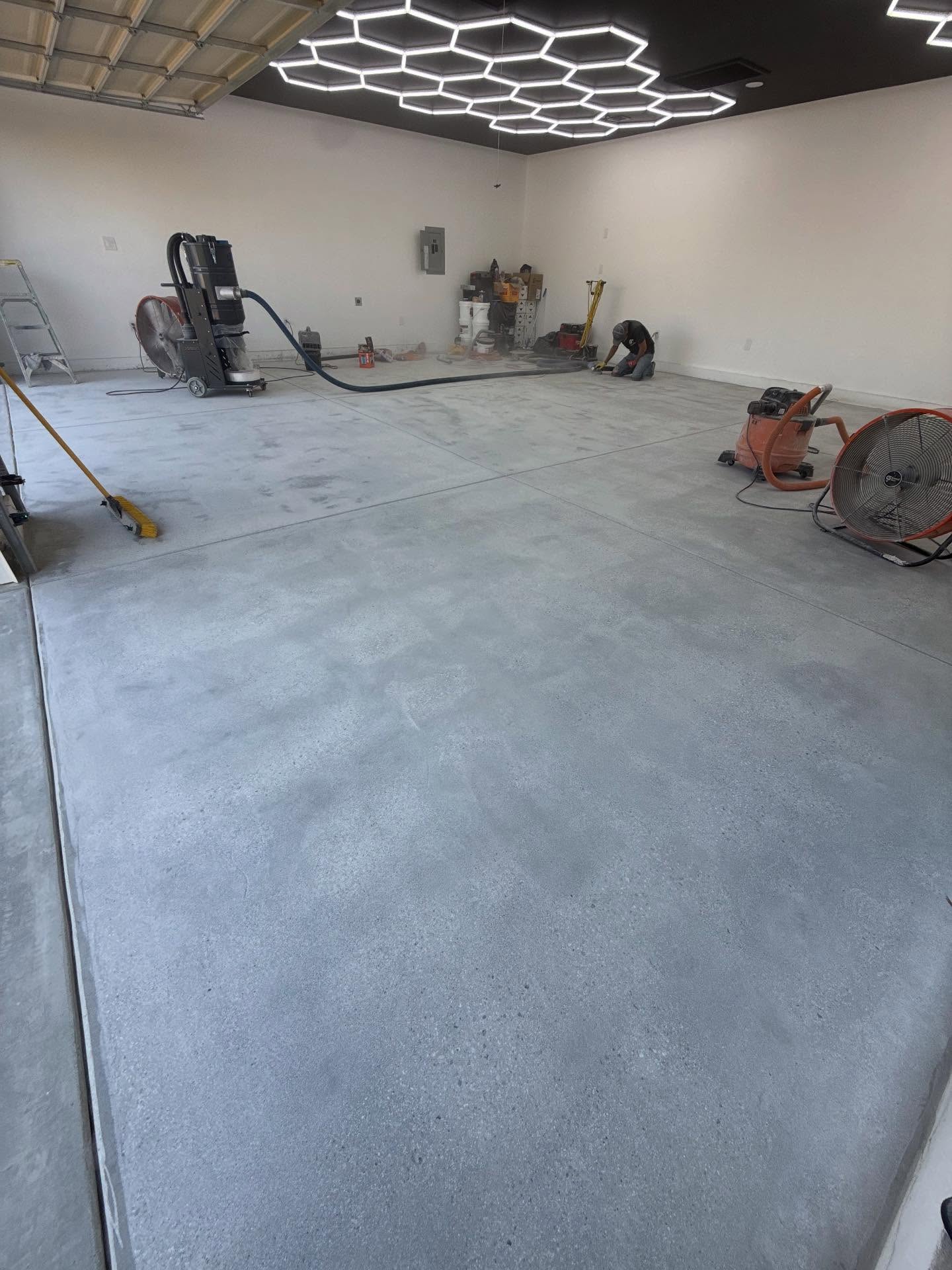
02 Diamond grind
Surface prep to CSP-3 profile, HEPA vacuum, rapid-set polyurea on crack lines, re-grind. Where every floor lives or dies.
03 Pour
Resin mixed on site, broadcast or swirled to match the system. Signature work happens here. Notched-trowel finish before the working window closes.
04 Topcoat
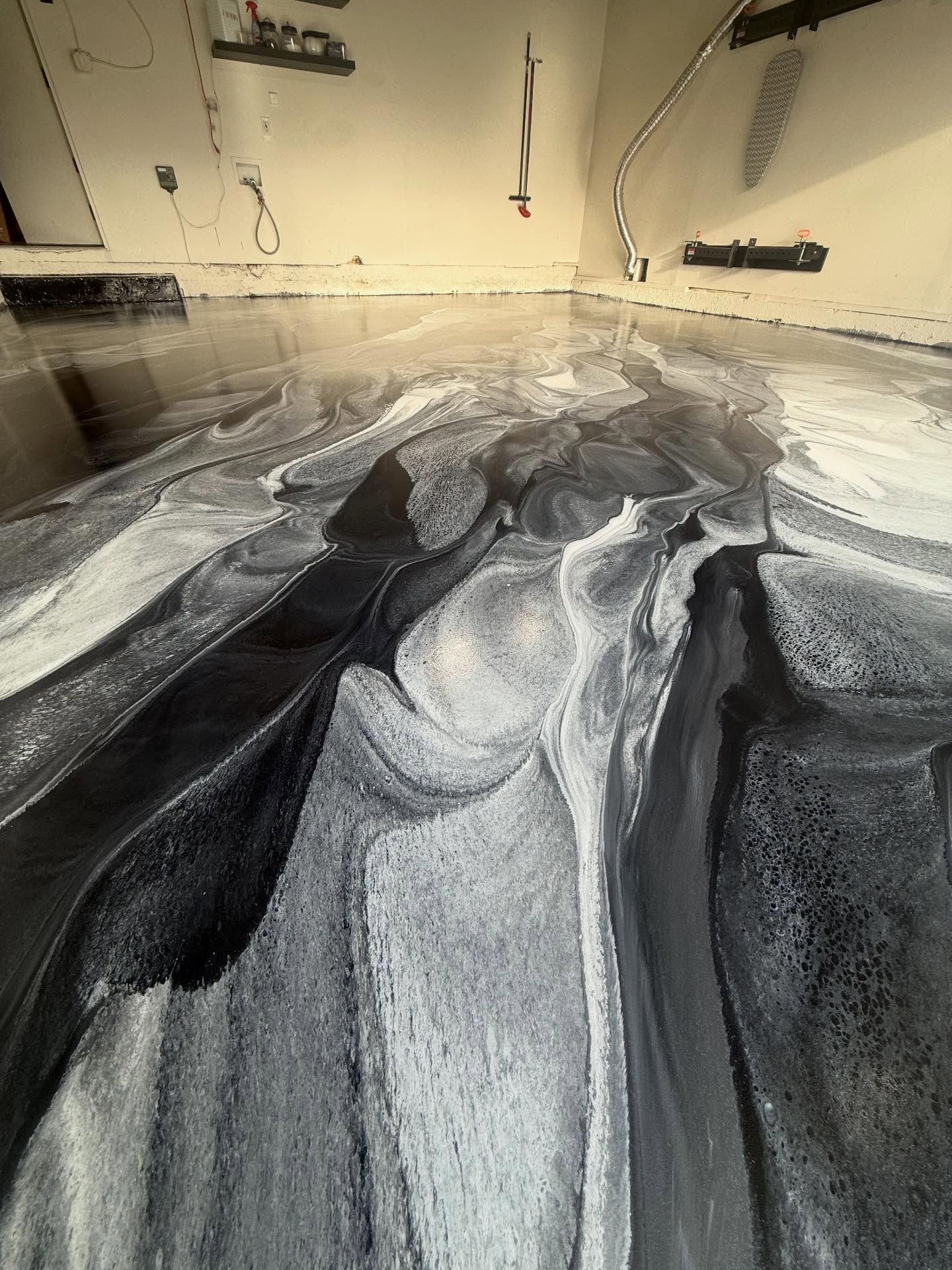
Polyaspartic or polyurethane within the resin chemical window. Walkable 24 hours, full traffic 72 hours. Written job spec before we leave.
Where we install polyaspartic coatings.
We pour polyaspartic coatings across all of our service areas: Los Angeles County, Orange County, the Inland Empire, San Diego County, Ventura County, Kern County, and Santa Barbara County. The system itself is the same across cities. Substrate prep adjusts to local concrete age and moisture conditions.
Orange County
Inland Empire & beyond
Three rules we do not break on a polyaspartic coatings install.
Grinding, vacuuming and crack repair take up the day before the pour, and they decide more about how long the coating lasts than anything that comes after. Here is the prep we keep in every proposal, at any budget.
01. Calibrated moisture testing
Calcium chloride or relative-humidity sleeve test on every polyaspartic coatings substrate before we order resin. If the vapor emission rate is above manufacturer spec, we apply a moisture-mitigation primer at our cost rather than gamble on the topcoat bond. Skipping this is the most common cause of the failed coatings we get called in to re-prep.
02. Diamond grind to spec
CSP-3 minimum for residential polyaspartic coatings, CSP-4 for high-build commercial. Shot blasting and acid etching are cheaper shortcuts that fail the resin manufacturer’s adhesion spec. We grind, HEPA-vacuum, polyurea-fill every visible crack, and re-grind. The prep day is the day the floor lives or fails.
03. Spec sheet with the resin maker named
Every polyaspartic coatings proposal we write names the resin manufacturer, the topcoat product, the substrate prep depth, the cure window, and the maintenance schedule. If a competitor’s proposal does not name these, you are buying on faith, not specs. Full liability and workers’ comp on every job.
Questions before the call.
What does polyaspartic coatings cost in Los Angeles?
Residential pricing for polyaspartic coatings in the Los Angeles market typically runs between the ranges quoted on our service pages, with the exact number determined by substrate condition, finish system, and square footage. Commercial pricing is always project-specific.
Every price we give comes after we have seen the slab. We come out, spend about 30 minutes on a free walkthrough, and send a fixed-price proposal the following morning. Nothing gets added by change order once the work starts.
How long does polyaspartic coatings take to install?
Square footage, the condition of the substrate and the system spec decide the calendar. A standard residential pour lands at two to three working days. Larger homes and commercial spaces run anywhere from four to fifteen.
The cure is quick. Foot traffic is fine a day after the topcoat, and vehicles can come back in after three days.
How long will my polyaspartic coatings last?
Installed right, the resin locks to the slab through a chemical bond. Residential systems are designed for that bond to hold for the life of the floor.
The resin layer is the part built to last: on commercial systems spec’d to their traffic and chemistry, 10 to 25 years is typical, and on residential floors it stays bonded to the slab. What you may redo at home is the polyaspartic topcoat, at the 8-to-12-year mark if the floor sees heavy use.
Can you match a specific color?
Metallic pigment can be mixed to any color you bring us. A few we have poured: deep teal, matte slate and mother-of-pearl.
Usually, yes. Custom blends on flake floors are unlimited, and quartz can be mixed custom beyond its 14 standard colors. If the color needs to live in the concrete itself, we add it integrally while pouring; if it goes on top, it is a topical stain after cure.
How does the install process actually work?
We start by testing the slab for moisture during the walkthrough, so we know what is coming up through the concrete before we coat it. The second stage is grinding to a CSP-3 profile and fixing cracks. Third is the pour, where the broadcast and any signature work happen. Fourth is the polyaspartic topcoat, followed by an inspection with you and a written spec of what we installed.
What happens after the floor is poured?
Nothing much, which is the point. Once the cure window passes the floor is yours, and the base resin stays bonded to the slab for as long as the floor is there.
Once we are packed up, you should not need us for routine care. Damp-mop it when it looks dirty. Skip the waxes and sealers sold for bare concrete; this floor has no use for them.
What makes Concrete 2 Coatings different from other contractors?
Three things, honestly. One, the owner walks every job and is on every prep day. We are not a franchise. Two, we are licensed and trained across resinous coatings AND decorative concrete AND structural slabs. Most LA shops pick one trade. Three, surface prep is non-negotiable: diamond-grind to CSP-3, HEPA-vacuum, re-grind. Most cosmetic failures trace back to skipped prep.
Pour polyaspartic coatings at your place.
Free walkthrough in 30 minutes. Fixed-price proposal in your inbox the next morning. (714) 702-2567 or the form below.