
Garage epoxy in Glendale.
Most Glendale garages are two-car attached bays on a 4-inch slab, and the older the house, the more cracks show up once the floor is clean. We fix the slab first, coat it second, and give you the garage back for parking after 72 hours.
The older two-car bay.
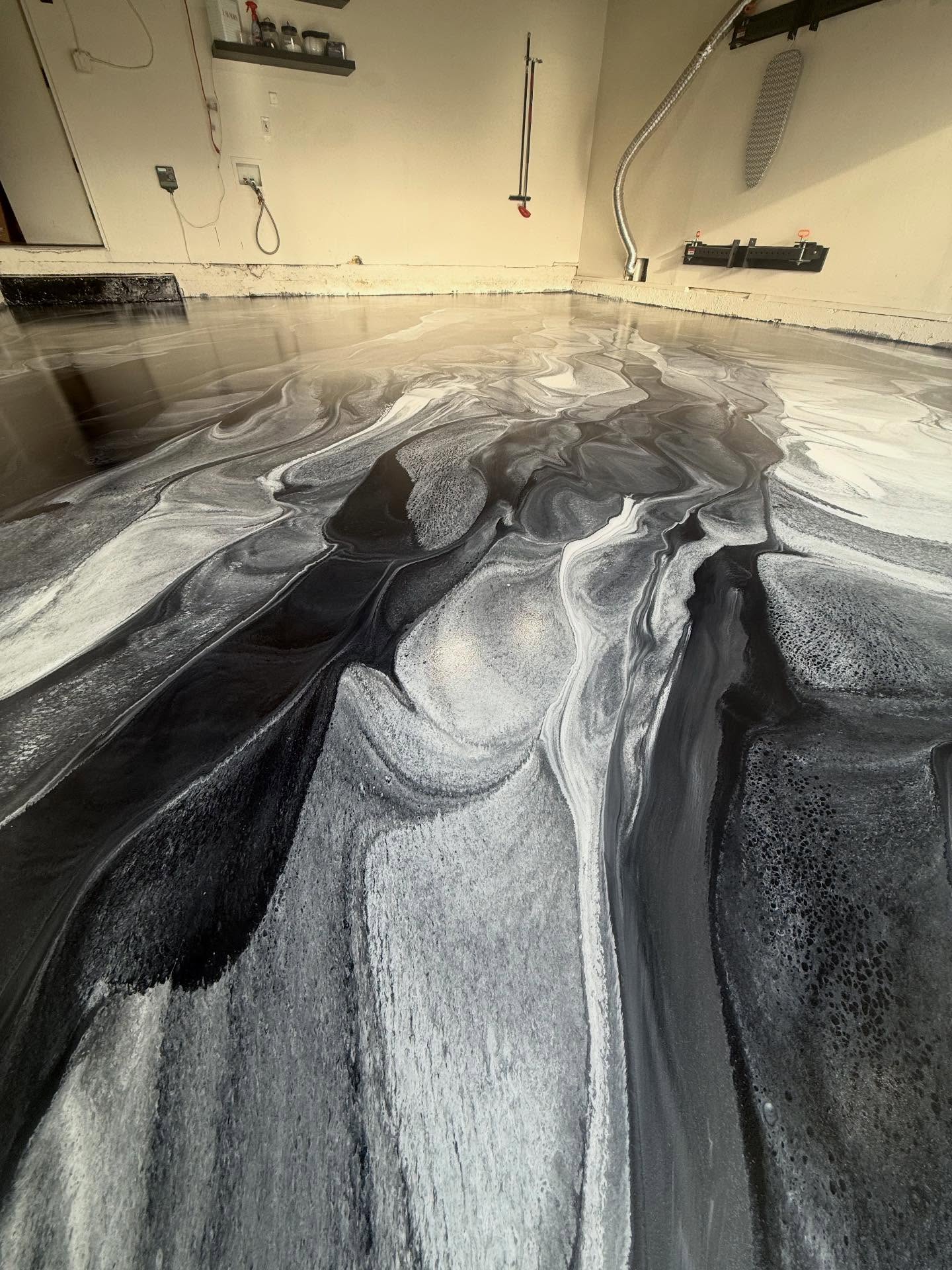
The typical Glendale garage we walk into is attached to the house, sized for two cars, and sitting on a slab poured when the house went up. In the older Adams Hill houses that slab has usually been through a few owners. Elsewhere in town the houses are newer, and the questions about the slab stay the same: what has it been through, and what is sitting on it now.
Most of these floors have had a life. Oil drips, a paint job flaking off in patches, a few hairline cracks, and often one longer crack running across the bay. Coating over all that without fixing it gets you a good-looking floor for a while and then a line across it.
So the first conversation at the walkthrough is about the slab, and the second is about the finish. We look at every crack, test the moisture and check how the slab meets the garage door. Then we sit down with color boards and talk about what you want the bay to look like.
Fixing the slab before anything is coated.
Cracks get filled rigid
Once the slab is ground, we open the cracks up, clean them out and fill them with a rigid repair material so they sit flush. A crack left soft under a coating tends to show back through as a line.
The door threshold
The strip of slab under the garage door takes rain, grit and the weight of every car coming in. That edge is often chipped or sits lower than the rest. We rebuild it and run the coating cleanly to the edge so it does not peel back from there.
Moisture read first
Every slab gets a moisture test before any resin is opened. An older garage slab can hold more water than it looks, and coatings laid over a damp slab are the ones that bubble and lift.
Old paint comes off
Garage floor paint and store-bought kits do not stay. We grind them off down to clean concrete, because a new coating is only as well stuck as whatever sits under it.
Cars, storage and the 72-hour wait.
Tires are the hardest thing a garage floor deals with. A car that just came off CA-134 or I-5 brings hot tires home, and on a soft or poorly bonded coating those tires can lift the finish when the car pulls back out. A properly ground slab and a hard topcoat handle it. That is also why cars stay out for 72 hours after the last coat, even though you can walk on the floor after 24.
Storage is the other half of the job. Everything on the floor has to come out: cars, bikes, boxes, the extra freezer. Shelving and hose reels on the walls can usually stay where they are, and we mask the bottom edge so the floor runs neatly underneath. Plan on the bay being empty for the two to three working days of the pour, and on the cars parking outside for three more days after that.
Metallic works in a garage too, like the floors in the photos on this page, black and silver or black, white and gray running to the back wall. It looks like a showroom, and a busy pattern hides tire marks a little better than a light one. If the garage is a working shop with dropped tools and dragged toolboxes, we will say so at the walkthrough and talk through a textured, harder-wearing finish.
If the garage is really a car project, the automotive floor coatings page goes further into showcase garages and detail bays, and the Glendale metallic epoxy page covers color choices in more depth. The grinding, crack work and testing are written up on epoxy floor prep. Shop owners can go straight to commercial epoxy. The full system is on our main garage epoxy page, and the rest of our work in town is on the Glendale page.
Before you clear the garage.
Do the cracks in my garage need fixing first?
Almost always, on an older Glendale slab. We grind the floor, open each crack, clean it out and fill it rigid so it sits flush with the concrete around it. Skip that step and a new coating tends to grow a line across it down the road. Crack work shows as its own line in the proposal.
When can I park in the garage again?
You can walk on the floor 24 hours after the last coat. Cars wait 72 hours. Tires are heavy, they turn in place, and they come home hot, and a topcoat that has not fully hardened can mark. Three days of parking on the street protects the floor for a long time after.
What happens with the stuff on the walls?
Wall shelving, cabinets that hang clear of the floor and hose reels can usually stay put. We mask their bottom edges and run the floor underneath them. Anything standing on the slab has to come out, including freestanding shelves and the second fridge. If something truly cannot move, tell us at the walkthrough.
My garage floor is painted. Can you coat over it?
No. Paint and store-bought kits only grip the surface, and a new coating on top would be only as strong as that old bond. We grind it all off down to clean concrete, test the moisture, and start from there. It adds work on the first day, and the floor needs it.
Is metallic too fancy for a garage?
It depends on what happens in there. For parking, storage and a car you care about, metallic looks great and holds up under a good topcoat. For a workshop with dropped tools and rolling toolboxes, a textured broadcast finish forgives more. We will tell you which fits at the walkthrough.
How do I clean it?
Sweep it, then go over it with a damp mop. That is the whole routine. No wax and no resealing. Oil drips and tire marks wipe up off the topcoat. When the topcoat eventually loses its gloss under tires, that layer gets refreshed on its own without touching the base.
Glendale, California. Garages from Rossmoyne and Adams Hill up to Sparr Heights, reached off CA-2, I-5 and CA-134.
Your garage, cleared and coated.
Tell us how many cars, how old the house is and what hangs on the walls. We come out for a free walkthrough of about 30 minutes, test the slab, and send a fixed-price proposal the next morning.