
Pasadena service
Pasadena’s garage slabs, ground and coated.
Most of the garages we coat here were poured by hand between the 1920s and the 1950s, sit detached at the back of the lot, and have nothing under them but dirt. We read the slab first, then pick the system. Grind, chase the cracks, build the coating, finish with a polyaspartic topcoat.
An old detached slab is its own animal.
A tract garage poured in 1985 is a known quantity. A hand-troweled slab behind a Craftsman on a Bungalow Heaven street is a set of questions you answer before you open a single pail of resin.
Those pours vary in thickness across the same bay, three inches at the door and five at the back wall, and the finish was floated by hand, so it reads wavy under a straightedge. There is usually no wire, no rebar, and no sheet of polyethylene under the slab. What sits beneath the concrete is native soil, and in the Arroyo and the Linda Vista hills that soil moves water downhill toward you every winter.
Then there is what eighty years put into the surface. Drip pans that leaked, a car rebuilt in there in 1968, paint thinned by a bench. Oil that old is not a stain sitting on top. It has wicked into the concrete, and it comes back up through anything rolled over it without prep. All of that is fixable. None of it is fixable by guessing.
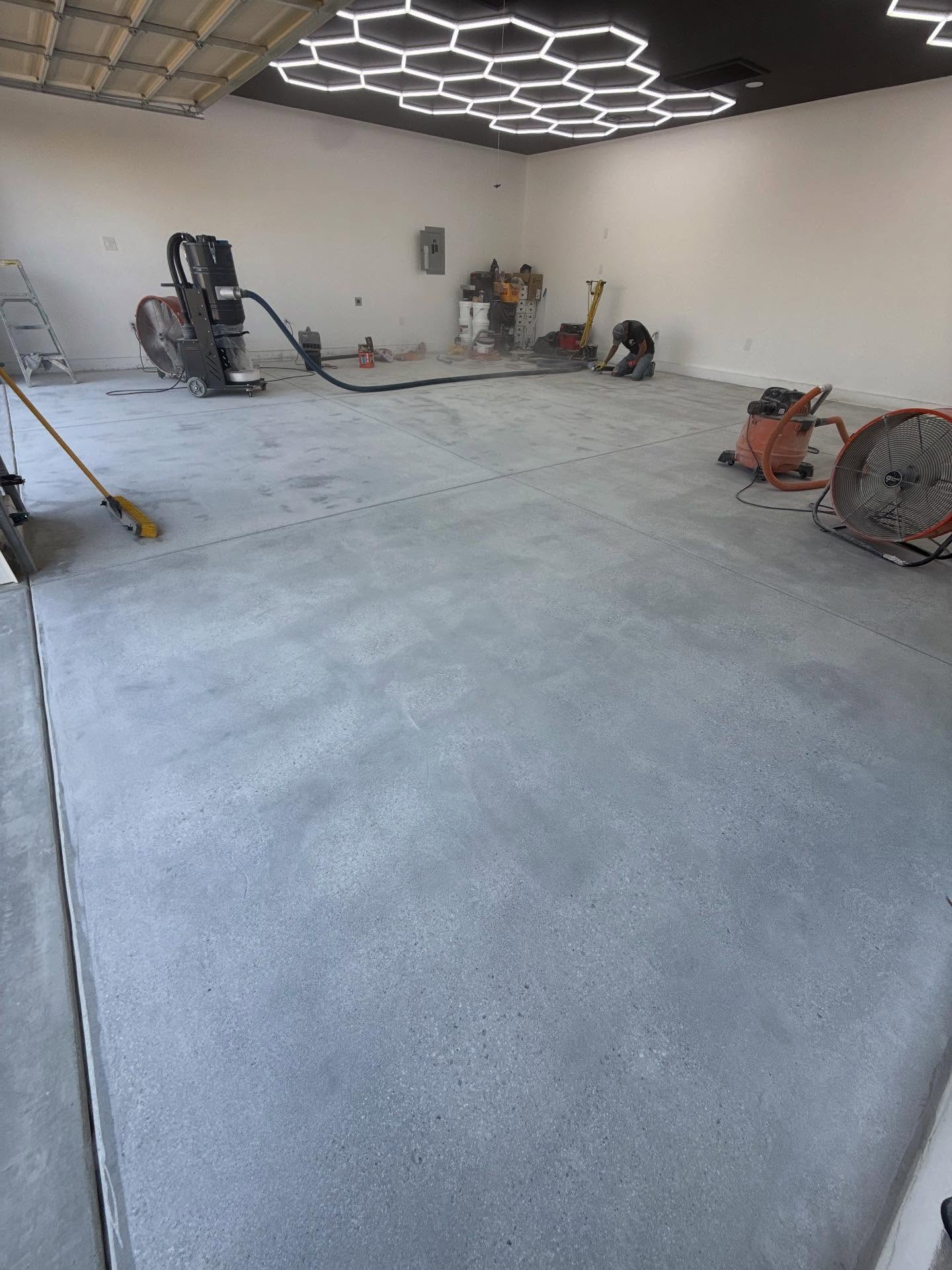
Moisture testing comes before the product conversation
On a slab with no vapor barrier under it, the concrete is a wick. Ground moisture rises and evaporates off the surface year round, whether or not the floor ever looks damp. Put a film-forming coating over a slab passing vapor faster than the system tolerates and the bond lets go in sheets, often inside two summers.
So we test. Relative humidity probes go into drilled holes and sit long enough to read the concrete at depth rather than the surface. Some Pasadena garages read clean and take a standard build, some need a moisture-mitigating primer under the body coat, and a few need mitigation plus a vapor-tolerant system. Skipping that test is the most common reason an old garage floor fails and the coating gets blamed for it.
What grinding takes off that acid does not
Acid etching bites the top skin, leaves residue to neutralize and rinse, and puts water back into a slab you are about to seal. Diamond grinding takes the floor past the weak cream layer to a real profile, dust collection going, so the resin keys into texture instead of a chemically roughened film. On a badly contaminated garage we grind, degrease, and grind again.
Cracks, and what the garage is about to become.
Two things shape the build more than the color anybody picked out: how the slab has already moved, and what the room becomes after we leave.
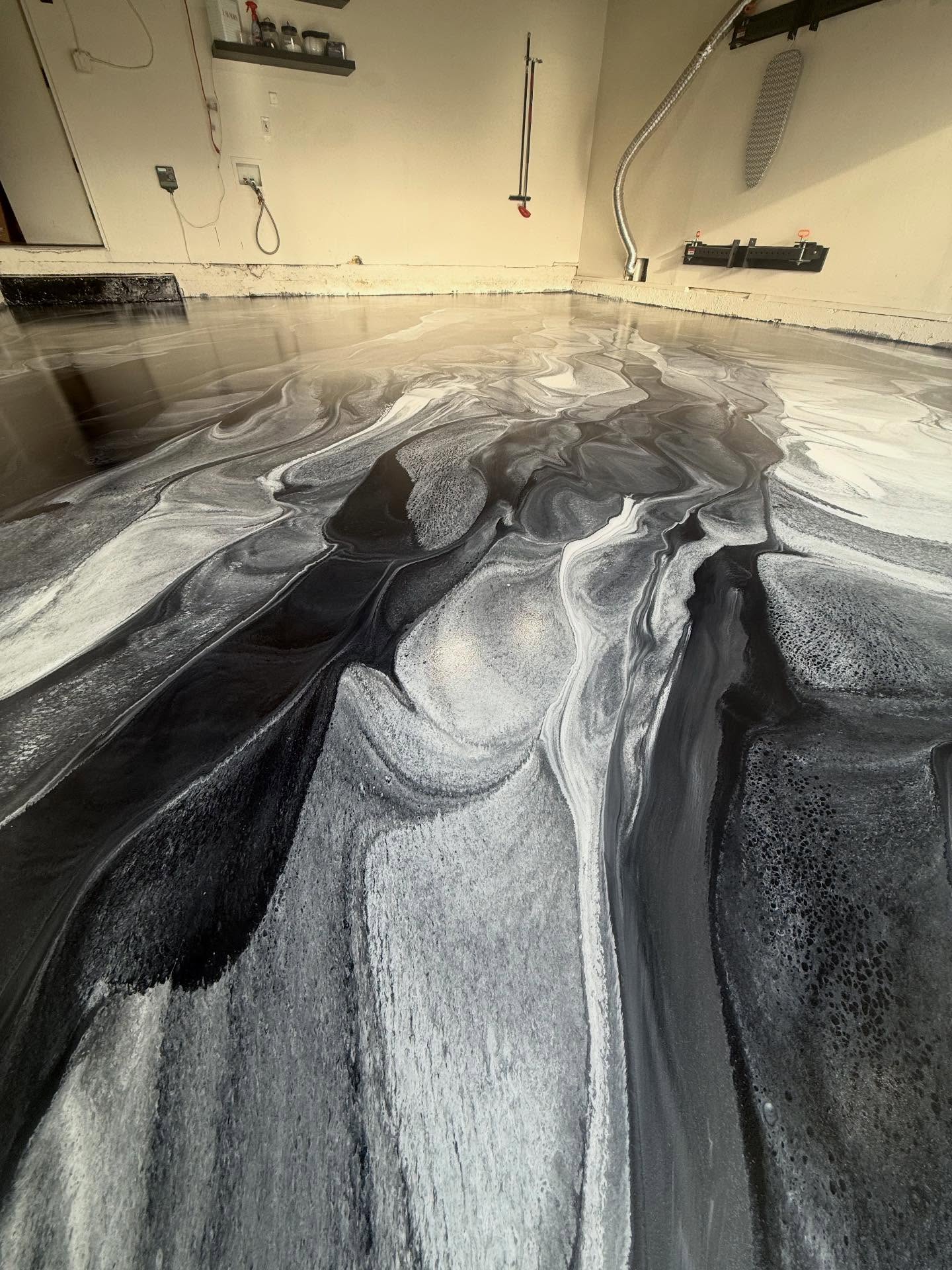
Cracks that already finished moving
An unreinforced slab in the ground since the Coolidge administration has settled, so the cracks you see are old, stable, and mostly harmless once treated. We chase each one open with a crack saw, vacuum it, fill it with a rapid-set polyurea that cures harder than the concrete around it, then grind the repair flush. Fresh edges or a lip between the two sides get flagged first, because that slab is still moving and no coating stops it.

Workshop, gym, studio, or ADU
Use changes the spec. A woodshop wants a satin finish that keeps chalk lines readable. A studio wants a light, even, cleanable field. An ADU is living space, so it gets a comfort build and a cove detail at the walls. Tell us the plan and the system follows it.
Summer cure windows in a closed detached bay
Inland Pasadena heat is dry, which helps, but a detached garage with the door down is an oven by two in the afternoon and the resin knows it. Pot life shortens, the material wants to flash before it levels, and roller marks set permanently. We pour those days early, stage smaller batches, run air, and read slab temperature rather than air. In August that means first light, and calling the day before the heat peaks.
Where the floor meets the apron.
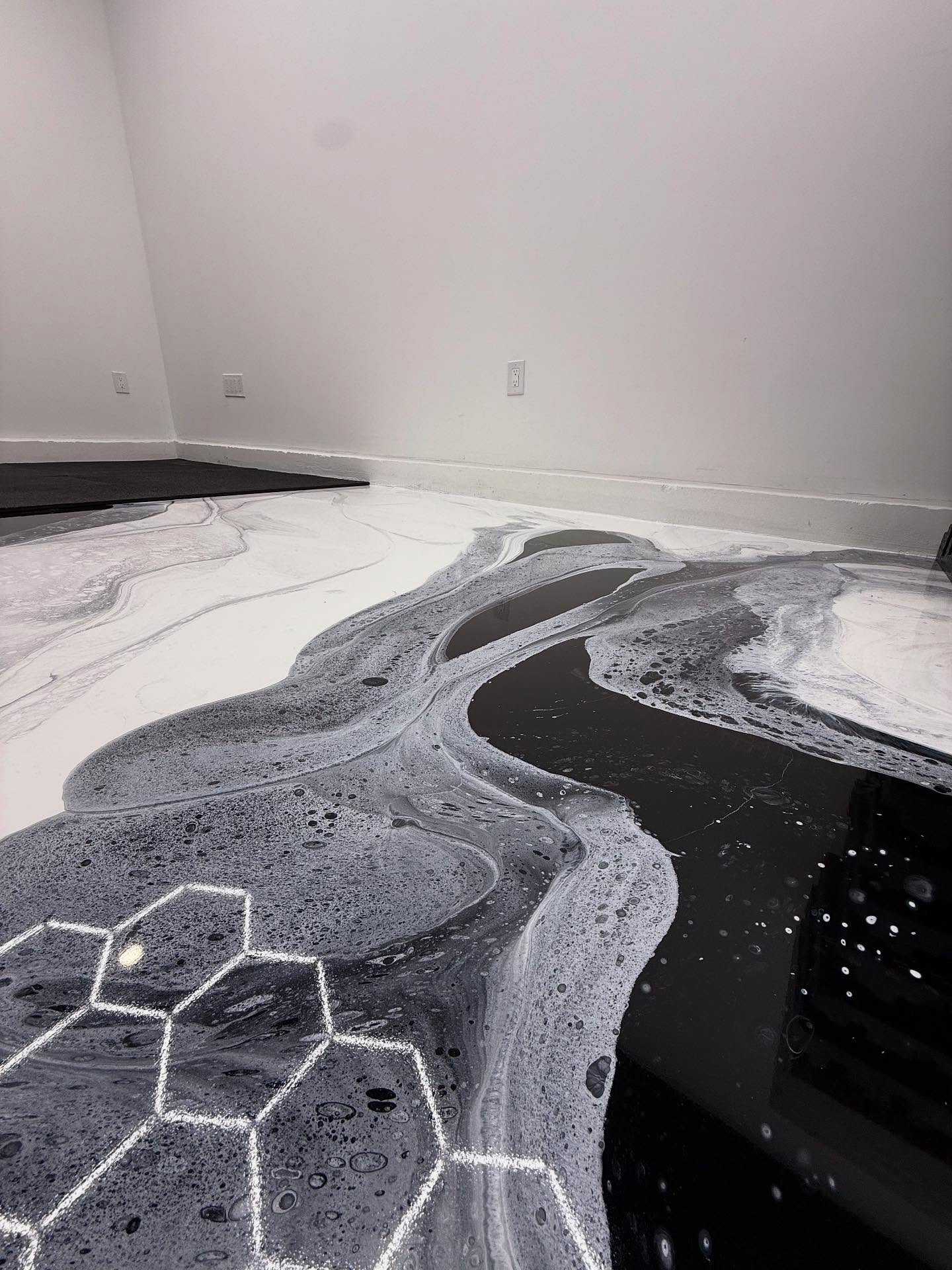
Older Pasadena properties almost always have a separate apron pour and a driveway that slopes back toward the garage, and that joint is where a careless install starts to fail.
The apron and the slab are two pieces of concrete poured at different times that cure and heat on their own schedules. Coating straight across the joint as if it were one floor traps that movement, and the film splits along the line within a season or two. We terminate the system at the door in a cut edge anchored into the slab, so the coating has a hard mechanical stop instead of a feathered lip that traffic peels back.
Runoff is the other half. A sloped drive on a foothill lot pushes winter water at that threshold, and against the San Gabriels it arrives with grit. Where drainage is a known problem we manage the water first, coat second, and leave the transition detailed so rain sheds away from the bond line. A spalled or lifted apron is concrete work, and we run the decorative side in house, so it is one visit rather than two trades pointing at each other.
What a typical Pasadena garage job looks like
- Walkthrough, moisture reading, a look at every crack and oil zone
- Contents out, diamond grind to profile, degrease and regrind where oil demands it
- Crack chasing and polyurea fill, spall repair, threshold cut at the door
- Primer or mitigation layer chosen off the moisture number, then the body coat
- Flake, quartz, or metallic broadcast to the finish you picked
- Polyaspartic topcoat, gloss or satin, slip additive if the bay gets wet
Walkable the next day, back under a car in about three. If you want to see finished work before you decide, the floor gallery is the fastest way, and the contact page is where the walkthrough gets booked.
Other work we do around Pasadena.
If a garage build is not the right fit, or the work runs past the garage door:
Pasadena, California. Bungalow Heaven to the Arroyo, Linda Vista to the east side of town.
What Pasadena homeowners ask us first.
Does a 1920s garage slab really need a moisture test?
Yes, and it is the one step we will not skip. The probes need time in the slab, so the reading happens well ahead of the pour, and it decides whether the floor takes a standard primer, a moisture-mitigating primer, or a vapor-tolerant system.
Why grind the floor instead of acid etching it?
Etching only bites the top skin and leaves old sealer, paint and deep oil in place. Grinding removes the weak cream layer and cuts a profile the resin can key into, which is where a contaminated floor actually comes clean.
My slab is already cracked. Do the cracks get fixed or covered?
Fixed. Each crack is sawn open, vacuumed, and filled with a rapid-set polyurea that ends up harder than the surrounding concrete, then ground flush so the repair disappears under the coating.
On a slab this old the cracks have almost always finished moving, which is what makes the repair permanent. Fresh edges or one side sitting higher than the other get flagged before any system is priced, because a coating will not hold a slab that is still shifting.
We are converting the garage into a gym. Does that change the floor?
It changes the build. A gym floor gets a heavier body coat for impact from dropped weights and a texture that stays grippy when it is damp, while a woodshop leans toward a satin finish that keeps layout lines readable and a studio or ADU gets a lighter, cleaner field with a cove detail at the walls. Tell us the use at the walkthrough and the thickness, texture, and sheen follow from it.
Can you coat a detached garage in the middle of summer?
We can, with the schedule built around the heat. A closed detached bay in inland Pasadena can run far hotter than the outside air by early afternoon, which shortens pot life and makes the resin flash before it levels.
On those jobs we start at first light, mix smaller batches, move air through the space, and work off slab temperature rather than the forecast. The floor gets poured before the day peaks.
What happens where the new floor meets the old apron?
The apron is a separate pour that moves on its own schedule, so the coating never runs across the joint. It stops at a cut edge anchored into the concrete at the door, a hard mechanical termination instead of a thin lip tires can lift.
If the drive slopes back toward the garage, common on foothill lots here, we look at where winter runoff goes before we coat.
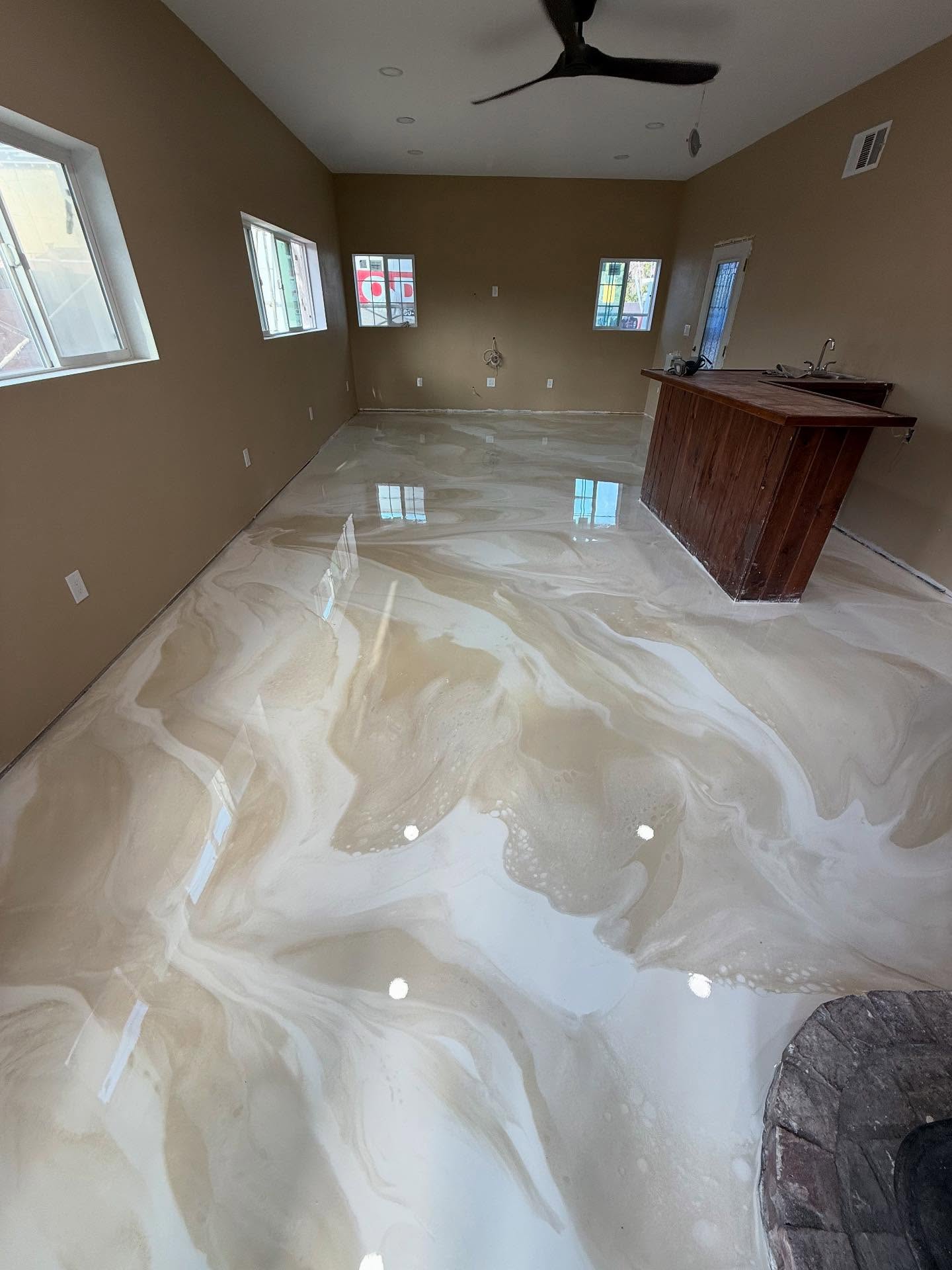
Bring us the slab you already have.
Thirty minute walkthrough, moisture reading, and a fixed-price proposal in writing. Call (714) 702-2567 or send the form.