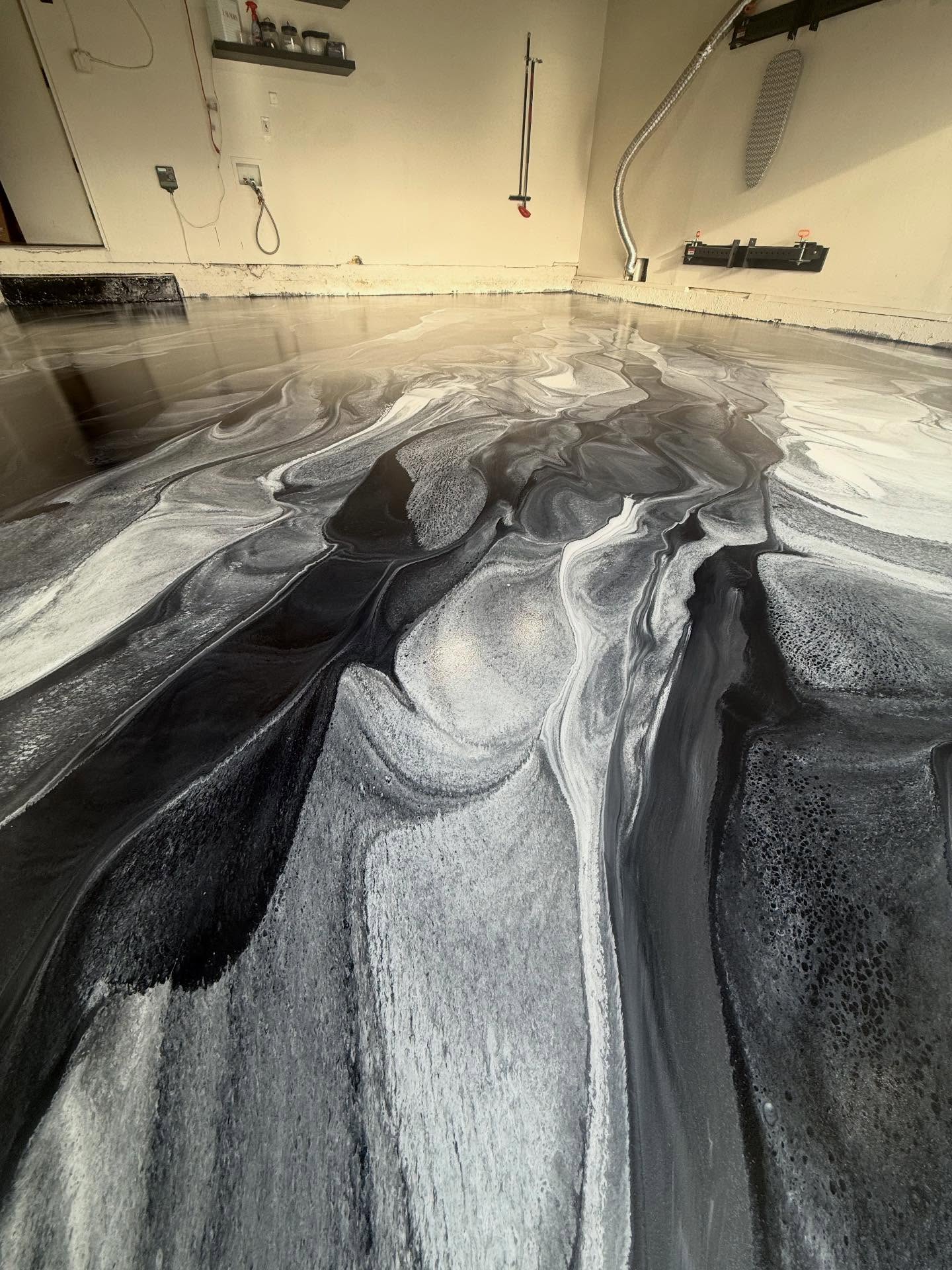
Pasadena work
Metallic epoxy poured for older Pasadena houses.
Pigmented resin poured wet, moved with a torch and a notched trowel, then locked under a polyaspartic topcoat. It cures closer to stone than paint, and no two floors come out alike. We pour it from Bungalow Heaven up through the Linda Vista hills.
The house already has a point of view.
A metallic pour is a finish decision before it is a floor decision. Here that matters more than it does in a tract neighborhood, because the architecture is already saying something.
Bungalow Heaven is block after block of Craftsman: quartersawn oak, dark trim, deep porches. Madison Heights and the streets off Orange Grove run Spanish Colonial Revival, white plaster and red tile and wrought iron. Above the Arroyo, in Linda Vista, you get mid-century houses set into the slope with a lot of glass. Three different rooms wanting three different floors. A metallic system can serve all three, and it can fight all three, which is what happens when the color gets chosen off a phone screen.
Blends that read with a Craftsman
For a Craftsman garage, or one of the back-house workshops people convert into studio space, we stay warm. Bronze over espresso. Oxidized copper. Tobacco with a thin gold vein. Those blends move the way old shellacked wood moves and sit quietly under dark rafters. High-contrast silver and white marble photographs beautifully and lands wrong under 1912 framing.
Spanish Revival and the hillside houses
Plaster and tile take cooler, deeper work well: charcoal with a slate vein, a deep bronze, or an oxide red picking up the roof tile. The mid-century houses off Linda Vista are the one place we happily run something bright. Those houses have the daylight for it, and the floor is often visible from inside through glass, so it gets treated like a room finish.
Panels get approved before anything gets poured
You sign off on the look in advance, not halfway through. We mix your blend on a two-foot sample board using the same resin, the same pigment lot and the same torch pattern the floor will get, then leave it in the space. Foothill light swings hard between morning and six in the evening, and a blend that reads bronze at noon can read muddy at dusk. Two or three panels is normal.
Under a slab poured in 1928.
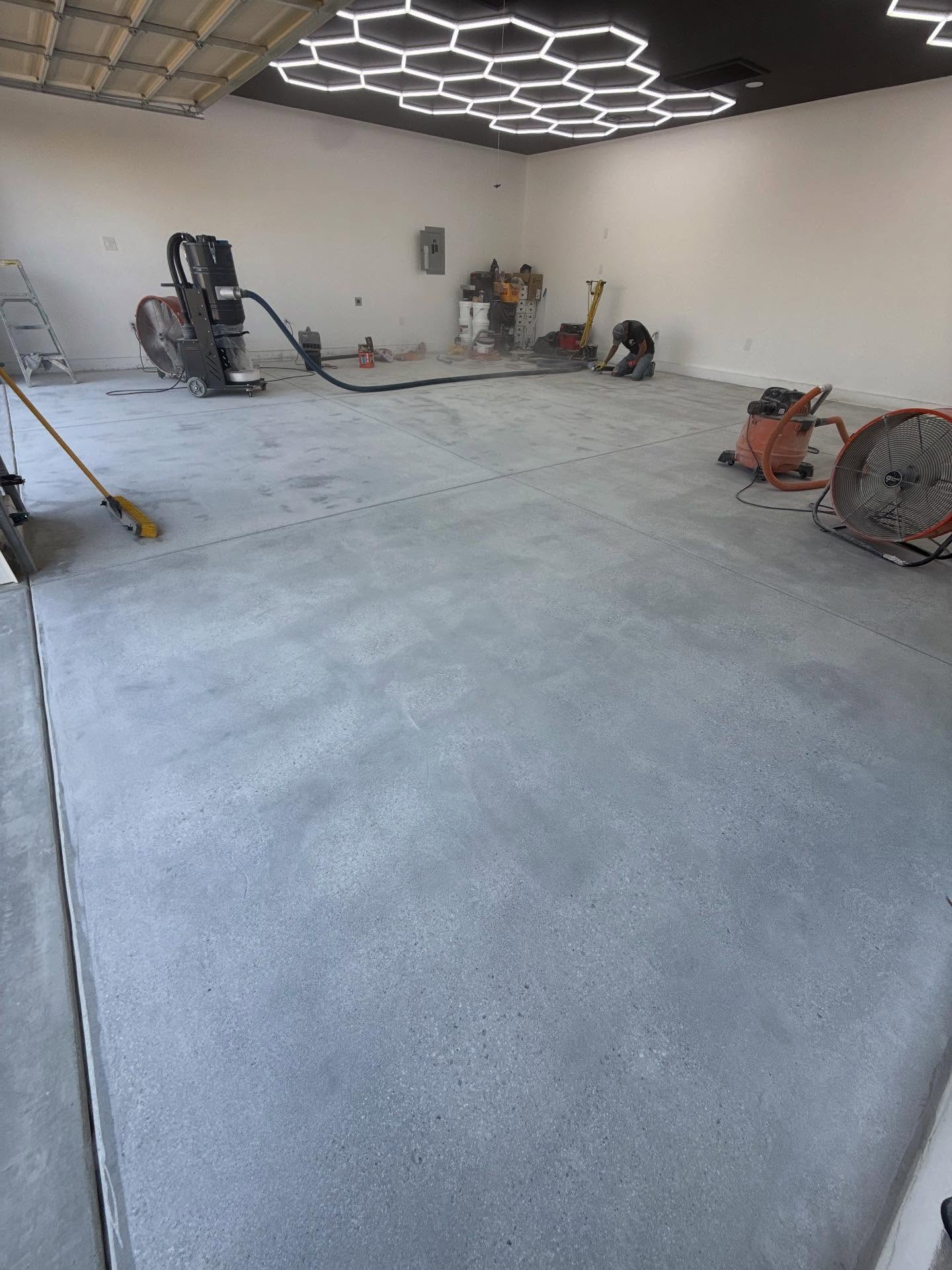
Metallic epoxy is the least forgiving system we install. It is a poured film that shows whatever is underneath it, which means the slab decides how the floor turns out.
Most of the detached garages we work in here went down between the 1920s and the 1950s, mixed on site, placed by hand in an afternoon, straight over dirt. No rebar. No vapor barrier. Thickness wanders from three inches to five across a single bay, and the top surface can be sandy in one corner and glass-hard six feet away. Tract slabs from the 1980s do not behave like that, which is why our grinding hours on a Pasadena job run longer.
Diamonds, not acid
Every floor gets mechanically ground with diamond tooling to a fully open profile, then vacuumed under a dust shroud. On an eighty-year-old slab that grind does two jobs: it strips decades of oil, paint and whatever sealer somebody rolled on in 1974, and it shows us where the soft material is. Cracks get chased out and filled with polyurea, spalled edges rebuilt, every patch flat before resin touches it. On a metallic floor, a low spot turns into a pool of pigment that cures darker than everything around it.
Water coming off the mountain
Pasadena sits at the foot of the San Gabriels, and the rain off those slopes in winter has to travel somewhere. On the foothill lots north of Washington and toward the Altadena line, what sits under a garage slab in February is nothing like August. With no vapor barrier below, that water moves up through the concrete as vapor and will lift a coating months after the job looked perfect.
So we test. Calcium chloride or relative humidity probes, run before the proposal is written. The reading picks the primer: standard epoxy on a dry slab, a moisture-mitigating primer on one pushing vapor. Skipping that step is the reason people call us to redo a floor somebody else poured two winters ago.
What we watch on a pour in this city.
Three things decide whether the floor looks like the panel you approved.

One shot, no touch-ups
A flake floor can be patched. Broadcast more flake, re-coat, and the repair vanishes. A metallic pour does not work that way. The pattern is made once, wet, with a torch and a trowel, inside a window of roughly forty minutes. If a section comes out wrong, the fix is grinding it back to bare concrete and pouring it again. That is why one crew pours the whole floor start to finish. If you want something more repairable, look at a flake system.
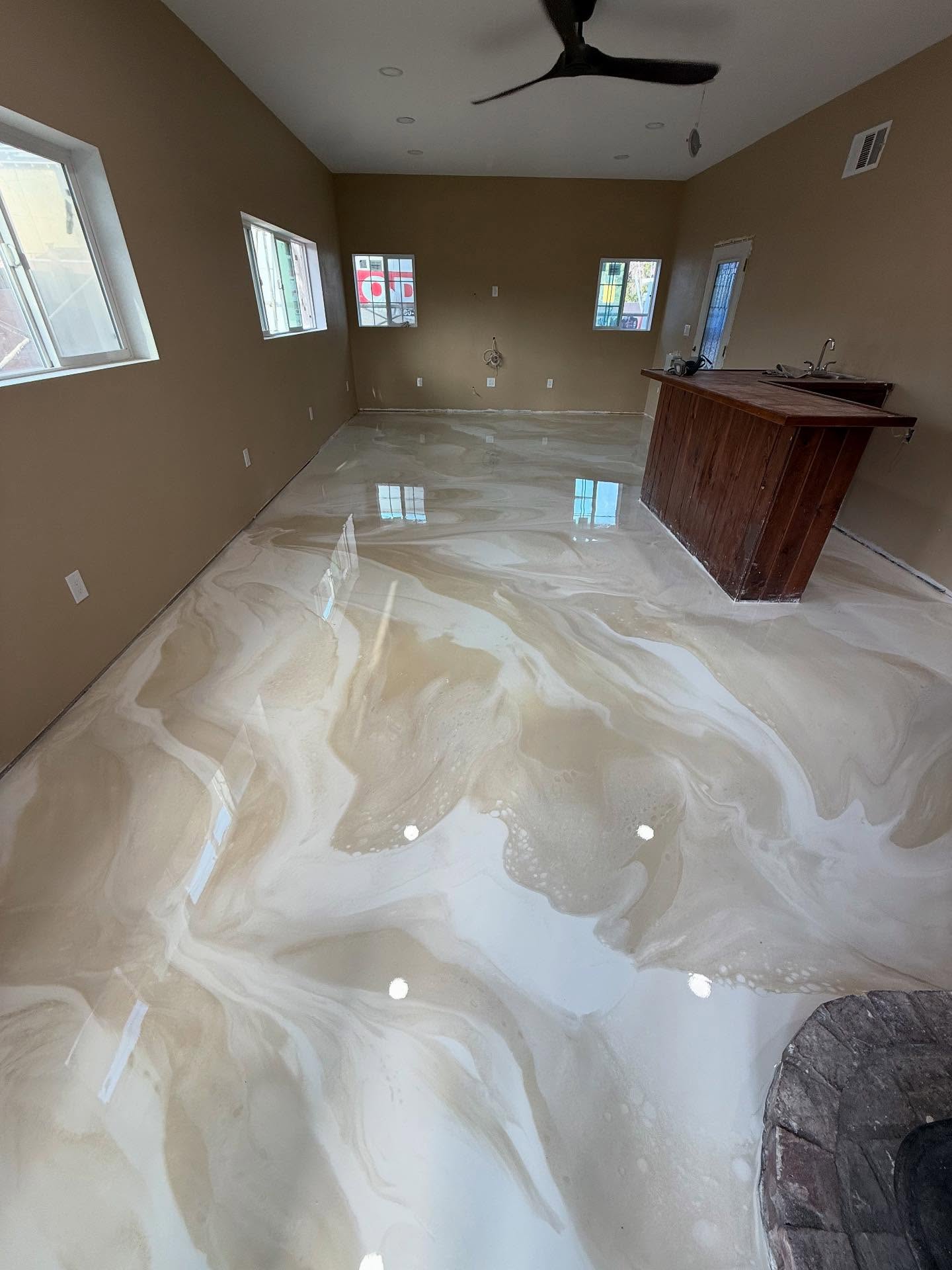
Pigment goes where the slab sends it
Metallic pigment floats and travels with the resin while it is still wet. It follows the fall of the slab, the trowel, the torch, and any dip in the substrate. On a hand-placed 1930s garage floor, the pattern is partly written by the concrete underneath. We flatten what has to be flattened and work with the rest, because a metallic floor that fights its own slab looks fussy.

Shops and studios off Colorado
Plenty of this work is commercial. We pour metallic floors in retail and studio space around Old Pasadena, in offices on the Caltech and JPL side of town, and in showrooms along Colorado Boulevard. Commercial runs on a different clock: after-hours mobilization, tighter cure scheduling, and a topcoat spec’d for rolling loads. Same crew either way. The commercial side has the full spec.
Pasadena, California. Bungalow Heaven and Hastings Ranch out to the Linda Vista hills, off I-210 and CA-134.
Other floors we pour here.
If a metallic pour is more finish than the space needs, here is the rest.
Questions before the call.
Will a metallic floor look out of place in an older Pasadena house?
It can, if the blend gets picked off a screen. It does not have to. The warm blends (bronze over espresso, oxidized copper, tobacco and gold) sit comfortably under Craftsman trim, and charcoal or oxide red works against Spanish Revival plaster. We leave sample panels in the house, in the real light, before anything gets scheduled.
Why does an old slab need more prep than a newer one?
Garage slabs poured here between the 1920s and the 1950s were batched on site, unreinforced, and laid straight on soil with no vapor barrier. Thickness and surface hardness vary across one bay. We diamond grind the whole floor to an open profile, chase and fill cracks with polyurea, rebuild spalled edges and flatten low spots, because a metallic pour shows every one of them.
Twenty years in the trade means we know what an unprepped 1930s slab does to a coating.
Do you moisture test before the pour?
Always, on a slab of that age. We run calcium chloride or relative humidity testing before the proposal is written, and the reading picks the primer.
Runoff off the San Gabriels puts real vapor pressure under a foothill slab through the winter, and a floor primed as though the slab were dry will let go months later.
Can a metallic floor be repaired or touched up later?
Not the way a flake floor can. The pattern is created once, while the resin is still moving. Repairing a section means grinding that area back to concrete and pouring it again, and it will never match across the seam.
If you want a floor that can be spot-repaired later, we will steer you toward flake or a polyaspartic build instead. We would rather say that up front.
What does summer heat do to the install?
A closed detached garage inland in August gets hot, and heat shortens the working time of the resin. It can also pull air out of a warm slab into the wet film, which leaves pinholes.
So we pour early, ventilate, keep material in the shade, and adjust the mix to the day. In the worst of the summer we move a pour to the first hours of the morning.
How long before I can park on it?
A standard two-car garage runs two to three working days from first grind to final topcoat. The floor is walkable roughly 24 hours after the last coat and takes vehicle traffic at 72 hours.
Tool chests, lifts and heavy shelving wait the same 72 hours, and tires parked on a floor before it fully hardens are the one thing that will mark a new topcoat.
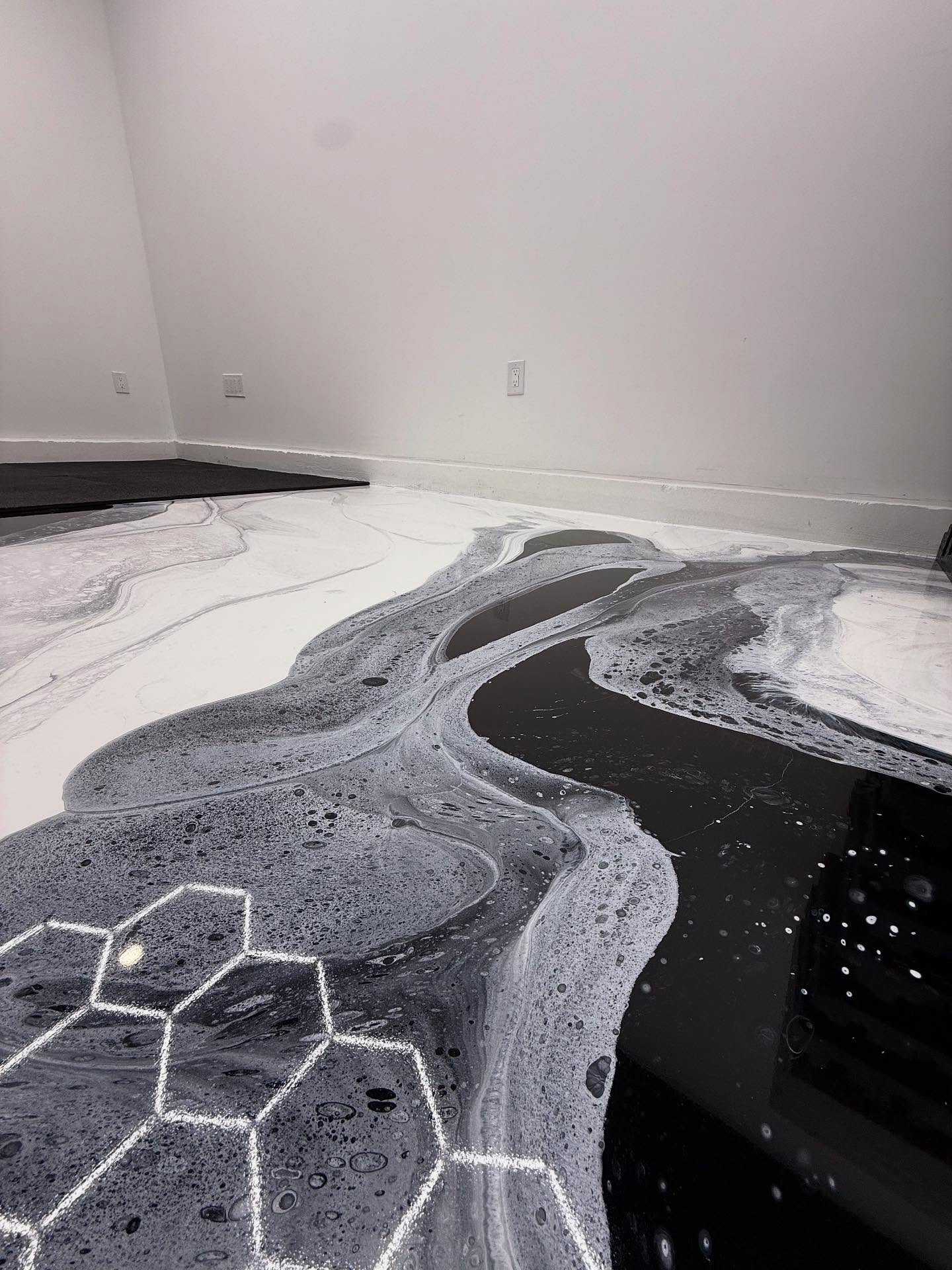
Let us read the Pasadena slab first.
Thirty minute walkthrough, a moisture reading on anything poured before 1960, and a fixed-price proposal the next morning. Call (714) 702-2567 or send the form.