
Service
Food & Beverage Epoxy in Los Angeles.
USDA-compliant epoxy and urethane cement systems for commercial kitchens, breweries, dairies, meat processing, beverage production, and any food-contact environment that requires sanitary, non-porous, slip-rated flooring.
What food and beverage epoxy actually is.
USDA-compliant epoxy and urethane cement systems for commercial kitchens, breweries, dairies, meat processing, beverage production, and any food-contact environment that requires sanitary, non-porous, slip-rated flooring.
The system
- USDA-compliant resin systems
- Integral cove base to slab transition (no harbor points)
- Slip-rated topcoats for wet-traffic kitchens
- Quartz-broadcast systems for maximum durability
What it costs
$10 to $20 per square foot installed.
How long it takes
Four to ten working days.
How long it lasts
15-25 years.
Where this fits
Commercial kitchens, breweries, distilleries, dairies, food processing, beverage bottling, cold storage.
How a food and beverage epoxy floor actually gets poured.
01 Walkthrough
Owner on site. Moisture test of the slab. Photos of existing cracks. Palette options walked in person. Proposal in your inbox next morning.

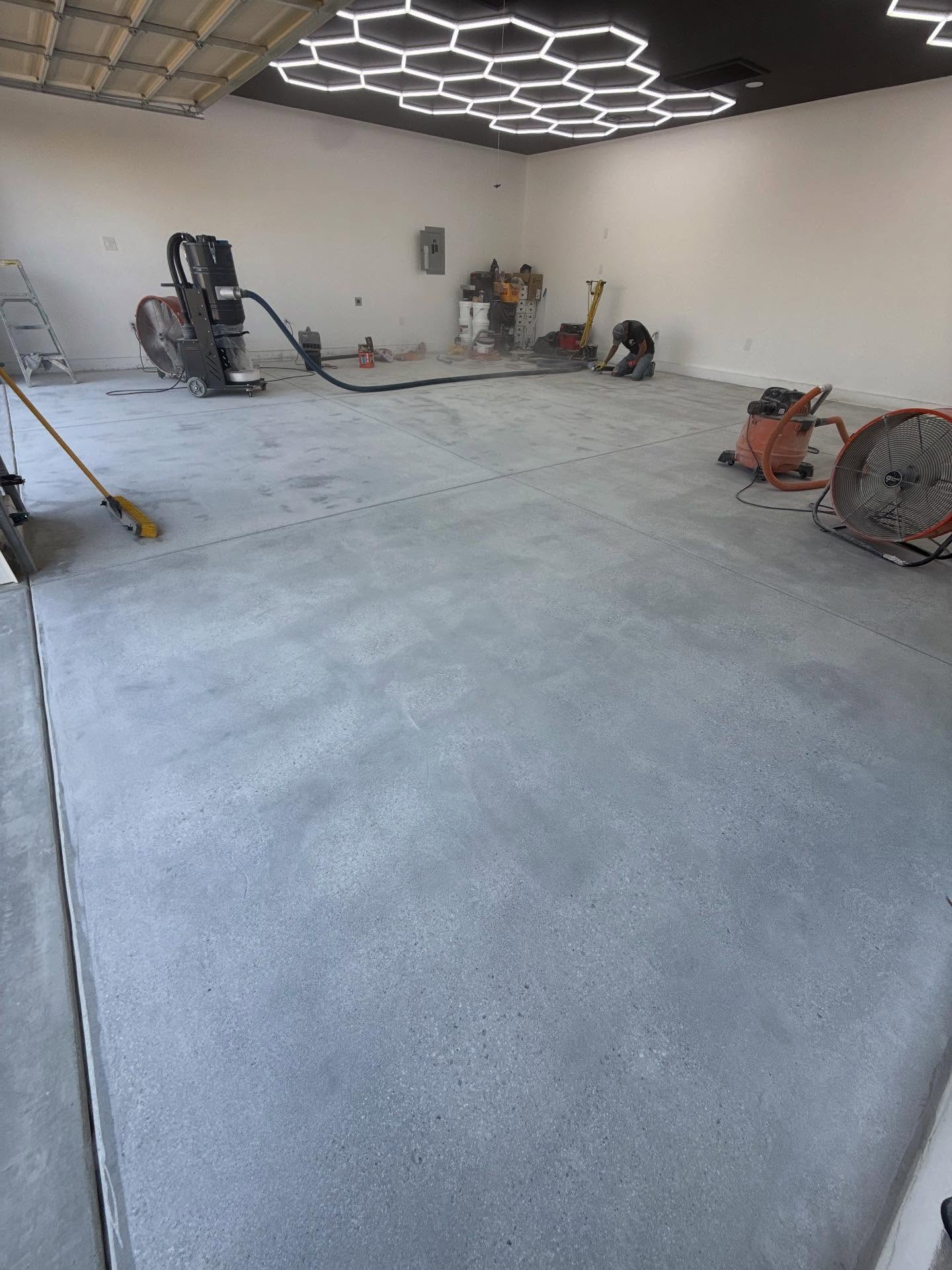
02 Diamond grind
Surface prep to CSP-3 profile, HEPA vacuum, rapid-set polyurea on crack lines, re-grind. Where every floor lives or dies.
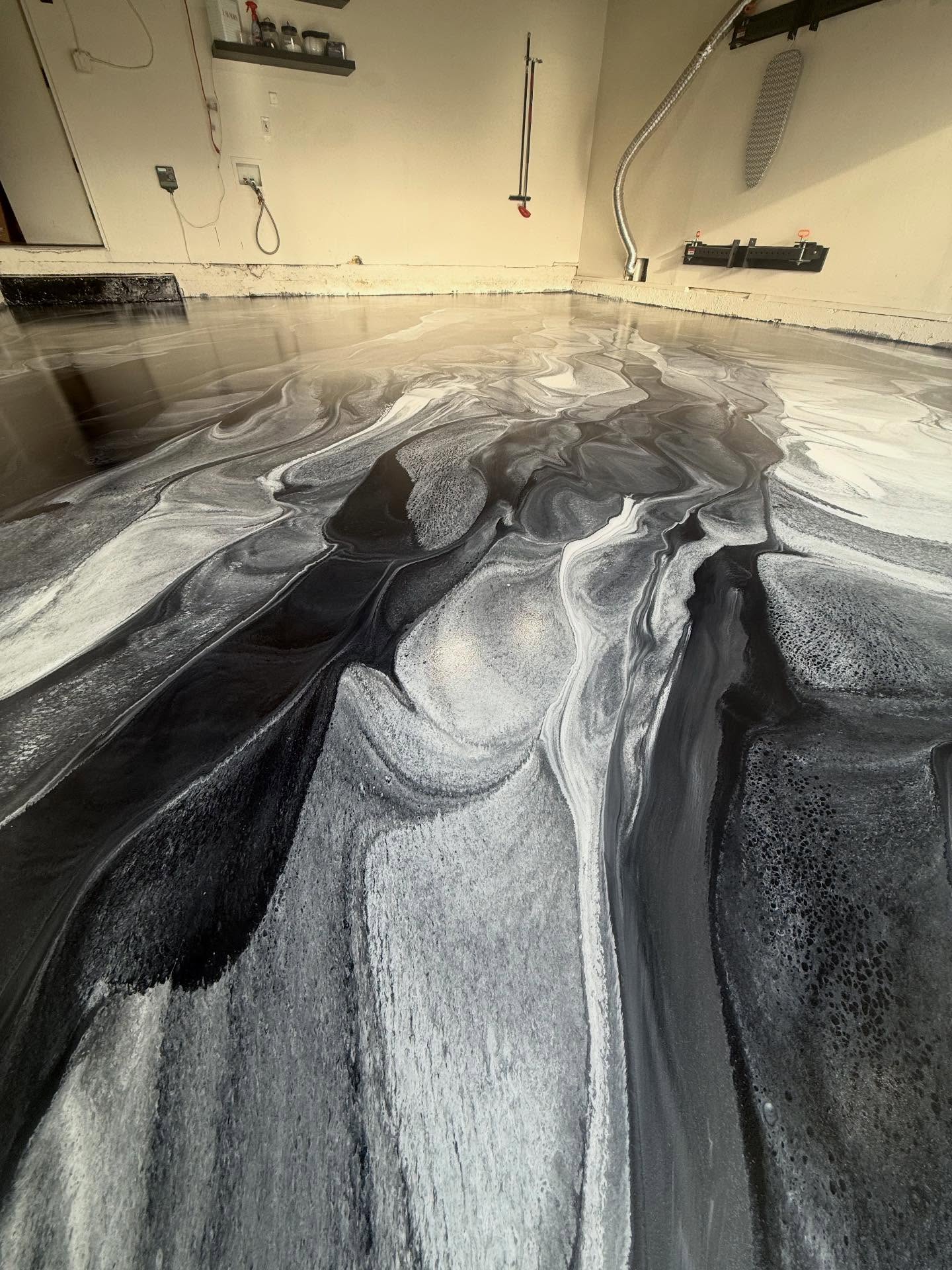
03 Pour
Resin mixed on site, broadcast or swirled to match the system. Signature work happens here. Notched-trowel finish before the working window closes.
04 Topcoat
Polyaspartic or polyurethane within the resin chemical window. Walkable 24 hours, full traffic 72 hours. Written job spec before we leave.
Where we install food and beverage epoxy.
We pour food and beverage epoxy across all of our service areas: Los Angeles County, Orange County, the Inland Empire, San Diego County, Ventura County, Kern County, and Santa Barbara County. The system itself is the same across cities. Substrate prep adjusts to local concrete age and moisture conditions.
Orange County
Inland Empire & beyond
Three rules we do not break on a food and beverage epoxy install.
Most of what separates a coating that lives 15 years from one that fails at year three is decided on prep day, before any resin gets mixed. Here is what we will not skip, regardless of project budget.
01. Calibrated moisture testing
Calcium chloride or relative-humidity sleeve test on every food and beverage epoxy substrate before we order resin. If the vapor emission rate is above manufacturer spec, we apply a moisture-mitigation primer at our cost rather than gamble on the topcoat bond. Skipping this is the most common cause of the failed coatings we get called in to re-prep.
02. Diamond grind to spec
CSP-3 minimum for residential food and beverage epoxy, CSP-4 for high-build commercial. Shot blasting and acid etching are cheaper shortcuts that fail the resin manufacturer’s adhesion spec. We grind, HEPA-vacuum, polyurea-fill every visible crack, and re-grind. The prep day is the day the floor lives or fails.
03. Spec sheet with the resin maker named
Every food and beverage epoxy proposal we write names the resin manufacturer, the topcoat product, the substrate prep depth, the cure window, and the maintenance schedule. If a competitor’s proposal does not name these, you are buying on faith, not specs. Full liability and workers’ comp on every job.
Questions before the call.
What does food and beverage epoxy cost in Los Angeles?
Residential pricing for food and beverage epoxy in the Los Angeles market typically runs between the ranges quoted on our service pages, with the exact number determined by substrate condition, finish system, and square footage. Commercial pricing is always project-specific.
We write fixed-price proposals after the on-site walkthrough so there are no change orders mid-pour. Walkthrough is free, takes about 30 minutes, and you have the proposal in your inbox the next morning.
How long does food and beverage epoxy take to install?
A standard residential pour runs two to three working days from prep to final topcoat. Larger residential or commercial pours can run four to fifteen days depending on system spec, substrate condition, and square footage.
The polyaspartic topcoat makes the floor walkable in 24 hours after the final coat. Full vehicle traffic returns at 72 hours.
How long will my food and beverage epoxy last?
Properly installed resinous floor systems are not cosmetic. They are a chemical bond to the substrate. Residential floors are engineered for lifetime adhesion to the slab.
The polyaspartic topcoat can be refreshed at the 8-to-12-year mark on heavy-use residential floors. The base resin stays bonded. Commercial systems are spec’d to traffic and chemistry; typical lifespan is 10-25 years on the resin layer.
Can you match a specific color?
Yes. Metallic epoxy pigments mix to any color in the spectrum. We have poured deep teal, copper-on-bronze, matte slate, mother-of-pearl, ocean blue with charcoal veining, and just-black.
Flake systems come in pre-blended color packs and unlimited custom blends. Quartz comes in 14 standard colors plus custom mixes. Decorative concrete colors are added integrally during the pour or applied as a topical stain post-cure.
How does the install process actually work?
Every job follows the same four-stage workflow. Day one is walkthrough and moisture test. Day two is diamond grinding to a CSP-3 profile and crack repair. Day three is the pour, broadcast, and signature work. Day four is the polyaspartic topcoat. We do a final inspection with you on-site and hand you a written job spec before we leave.
What happens after the floor is poured?
We schedule a check-in call at the three-year mark to look at the floor and the topcoat. If the gloss layer needs a refresh, we schedule the work. The base resin is bonded to the substrate for the life of the floor.
Between then and now, the floor maintains with a damp mop. No waxing, no sealing, no annual service appointment. The system is engineered to live without us in your house.
What makes Concrete 2 Coatings different from other contractors?
Three things, honestly. One, the owner walks every job and is on every prep day. We are not a franchise. Two, we are licensed and trained across resinous coatings AND decorative concrete AND structural slabs. Most LA shops pick one trade. Three, surface prep is non-negotiable: diamond-grind to CSP-3, HEPA-vacuum, re-grind. Most cosmetic failures trace back to skipped prep.
Pour food and beverage epoxy at your place.
Free walkthrough in 30 minutes. Fixed-price proposal in your inbox the next morning. (714) 702-2567 or the form below.