Automotive floor coatings in Glendale.
Glendale is a car town. Detail-shop bays and home showcase garages need a floor that shines under bright light, stands up to hot tires and keeps its grip where the wash water runs. That kind of gloss shows every flaw, so prep carries the job.
Bays and showcase garages under bright light.
The south end of Brand Boulevard is a long run of car dealerships, and around a street like that you find the rest of the car business: detail shops, small service bays, and private garages where people keep the car they care about most. Detail-shop bays are part of our commercial work in Glendale, and showcase garages come up on the residential side.
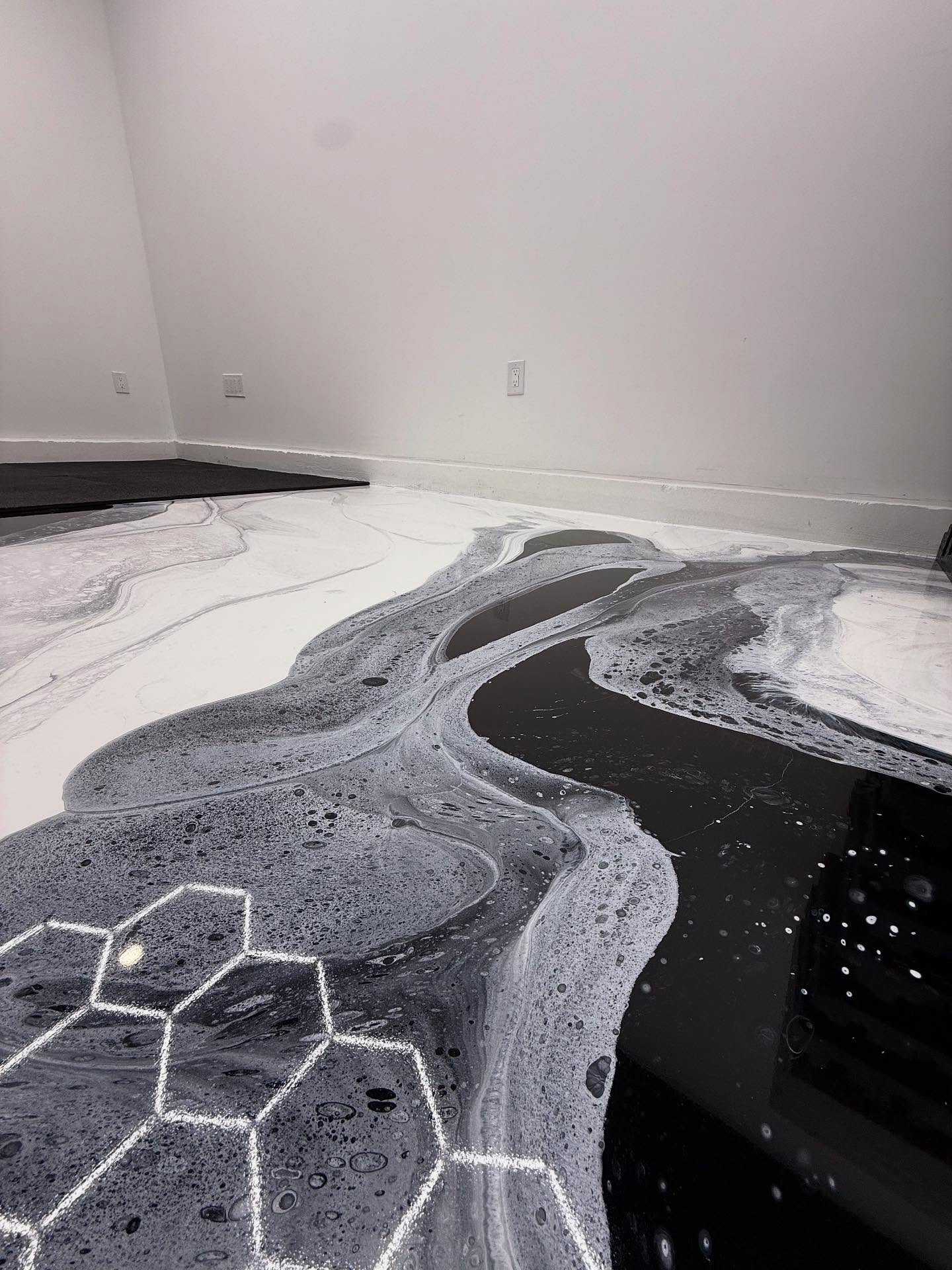
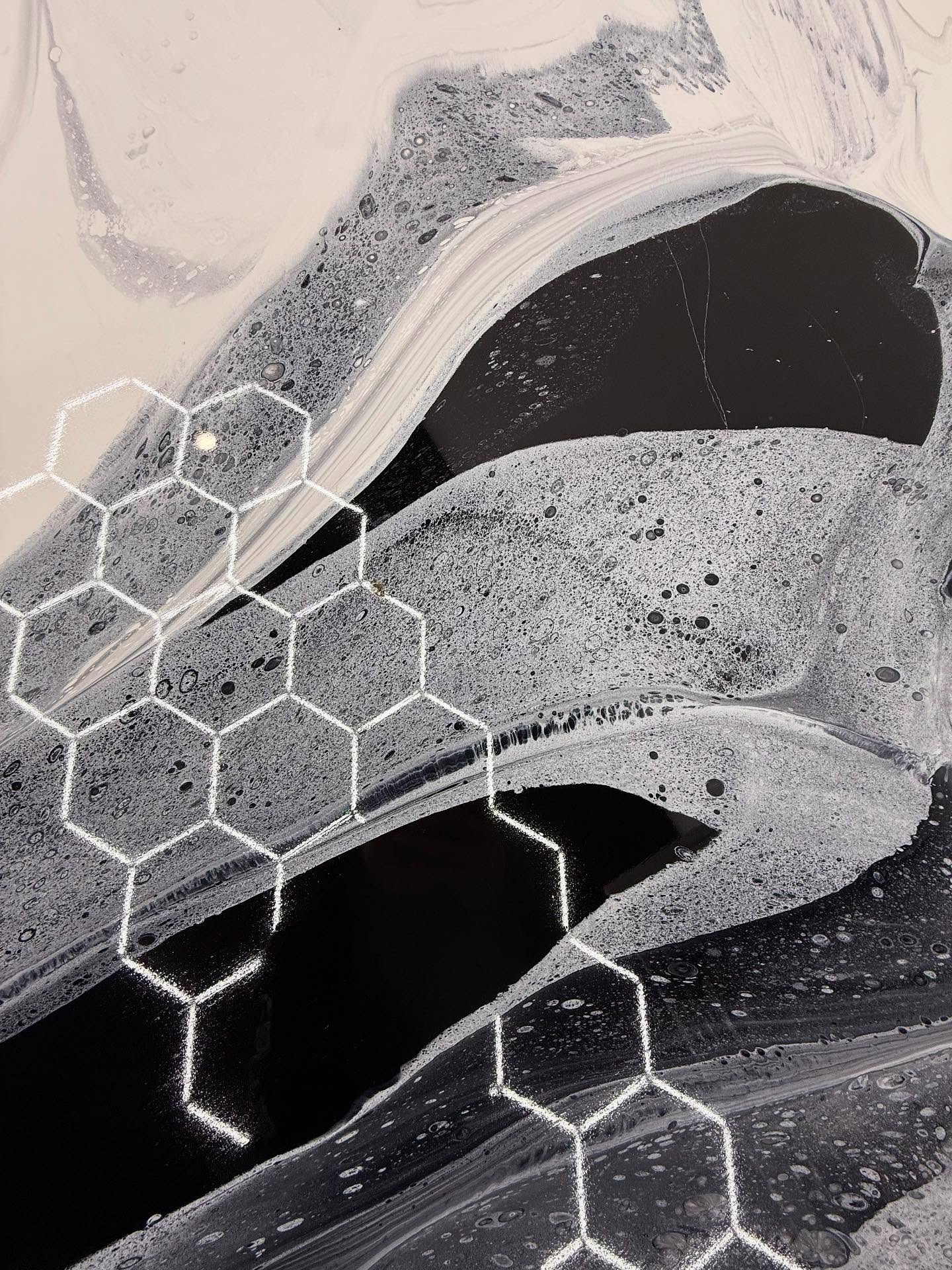
Plenty of those spaces are lit with hexagon LED grids, bright and even, the kind of light that makes paint correction possible. Look at the floor in the photo further down this page and you can see the grid reflected in the gloss. That is the appeal. It is also the catch, because a mirror finish shows everything underneath it.
Every trowel mark, patched crack and speck of dust that landed in the wet resin shows up once those lights come on. So an automotive floor gets more prep time and tighter dust control than a garage that just parks a commuter car, and we build the schedule around that from the first day.
What a car floor has to put up with.
Hot tires
A car pulled in after a drive brings hot rubber onto the floor. On a weak coating, the tire softens the surface and pulls it up when the car moves again. A ground slab and a hard topcoat keep that from happening.
Fluids and degreasers
Oil, coolant, brake fluid and the degreasers detailers use every day all end up on the floor. The topcoat has to take them without staining or softening, and spills should come up with a towel and a damp mop.
Wash-bay water
Where cars get rinsed, a smooth gloss turns slick. We broadcast quartz into the wet coat in those zones so feet and creepers have grip, and keep the full gloss where the floor stays dry.
Fast turnaround
A detail shop that is closed is not earning. Polyaspartic systems cure quickly, so we schedule around your operating hours and hand bays back sooner than a slower system would allow.
Gloss shows everything, so prep runs the job.
Prep on an automotive floor starts with diamond grinding down to clean, open concrete. Old coatings, tire marks and oil that has soaked in all come off. Cracks get filled and ground flush, because under a mirror finish a repair that sits a hair high reads as a ridge in the reflection.
Dust is the second fight. We grind with a dust extractor on the machine, clean the bay before any resin comes out, and keep doors and fans under control while the coats are wet. One stray bit of grit becomes a bump you notice every time the lights come on.
Every slab gets a moisture test, every pour, including the newer ones. Bubbles and lifted spots in a high-gloss floor usually trace back to moisture or a weak bond, and both are far easier to deal with on day one than after the topcoat is down.
Then the timing. You can walk the floor 24 hours after the last coat. Cars stay off for 72 hours, and in a working detail shop that window is what we plan around with you: which bays close first, which keep running, and the order they come back.
If the car lives at home, the Glendale garage epoxy page covers the everyday two-car bay, and metallic epoxy goes deeper on color. Detailers with a storefront or back office can read commercial epoxy, and the grinding and testing steps are on epoxy floor prep. Our main automotive floor coatings page lays out the system, and the Glendale page covers everything else we pour here.
Questions from detailers and car people.
Can you coat a detail bay without closing the shop for a week?
We schedule around your operating hours and work bay by bay where the layout allows it. Polyaspartic systems cure fast, which shortens the time each bay is out. Cars still wait 72 hours after the last coat, so we plan the order of the bays with you at the walkthrough.
Will hot tires lift the coating?
Not on a floor that was ground and properly bonded. Hot tire pickup happens on coatings laid over dirty or painted concrete, or on floors driven on before they hardened. That is why we grind every slab down to clean concrete and hold the cars off for 72 hours.
How slippery is it when the bay is wet?
Full gloss gets slick with water on it. In wash areas we broadcast quartz into the coating so there is texture underfoot, and we keep the smooth gloss in the dry parts of the bay. Show us where the hose and the pressure washer get used and we map it out.
What about degreasers and brake fluid?
The topcoat is the layer that takes chemical contact, and we pick it with your products in mind. Wipe spills up the same day with a towel, then damp-mop the spot. Bring a list of what you use to the walkthrough and we will check it against the system.
Why does my LED grid make floor flaws stand out?
A bright, even light reflects off a gloss floor like a mirror, so any bump, pinhole or ridge breaks the reflection and your eye goes straight to it. That is why grinding, crack filling and dust control take up more of the schedule on these floors than on a regular garage.
How do I keep a show floor looking right?
Dust-mop it often and damp-mop with plain water or a mild cleaner. Skip wax and skip harsh scrub pads. The base resin stays bonded to the slab. The topcoat is the layer that wears, and when its gloss fades under traffic we come back and refresh just that layer.
Glendale, California, from the dealerships on Brand Boulevard out to Verdugo Woodlands and Northwest Glendale.
We will look at the bay and the lights over it.
A free walkthrough takes about 30 minutes. We test the slab, look at the lighting, ask about your products and your hours, and send a fixed-price proposal the next morning.