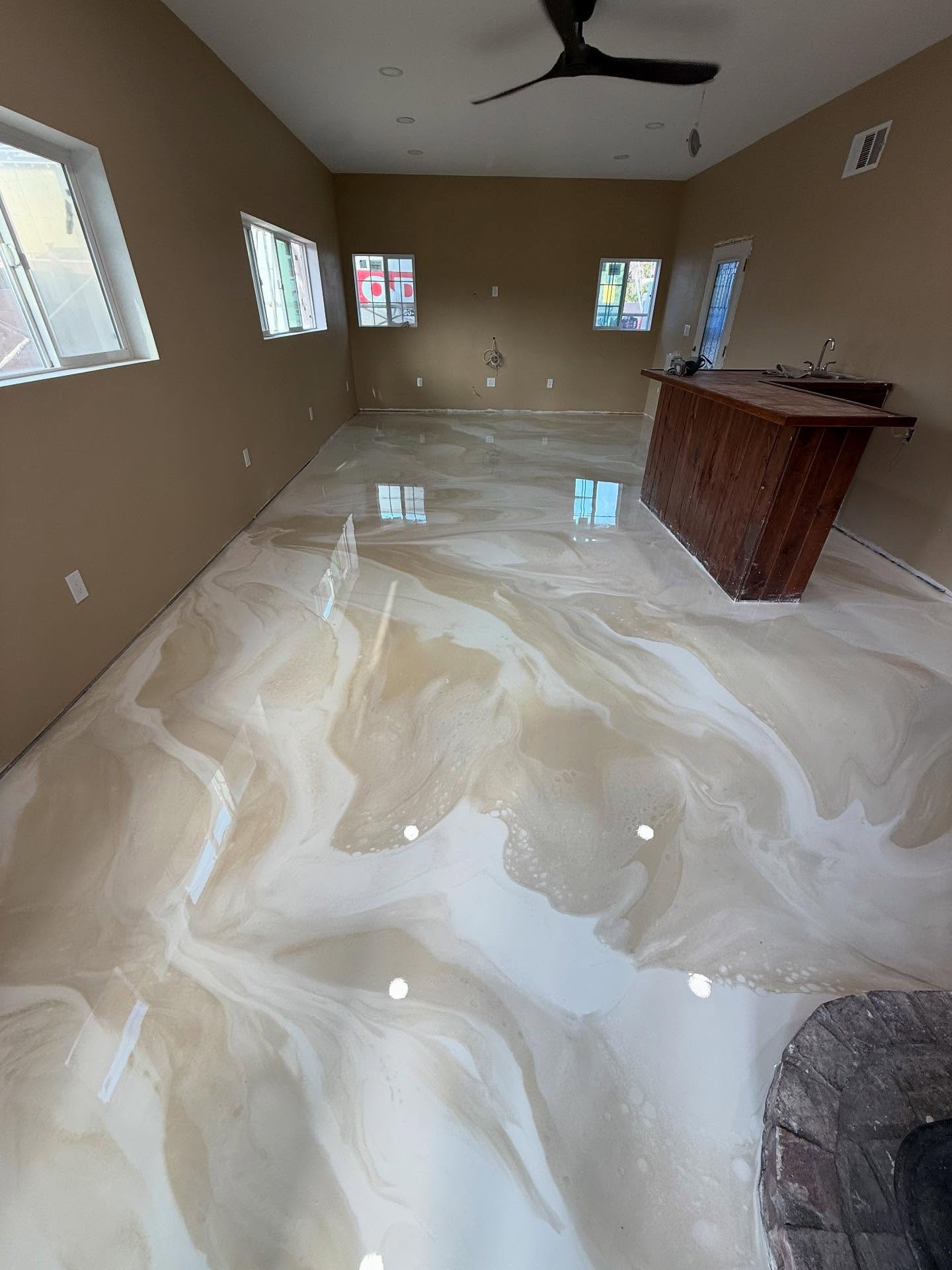
Commercial epoxy in Santa Clarita.
Newer slabs, straightforward access off I-5, and a valley full of business parks built from the eighties onward. Commercial work here is more predictable than most of Los Angeles County, and we price it that way.
Commercial floors for Santa Clarita.
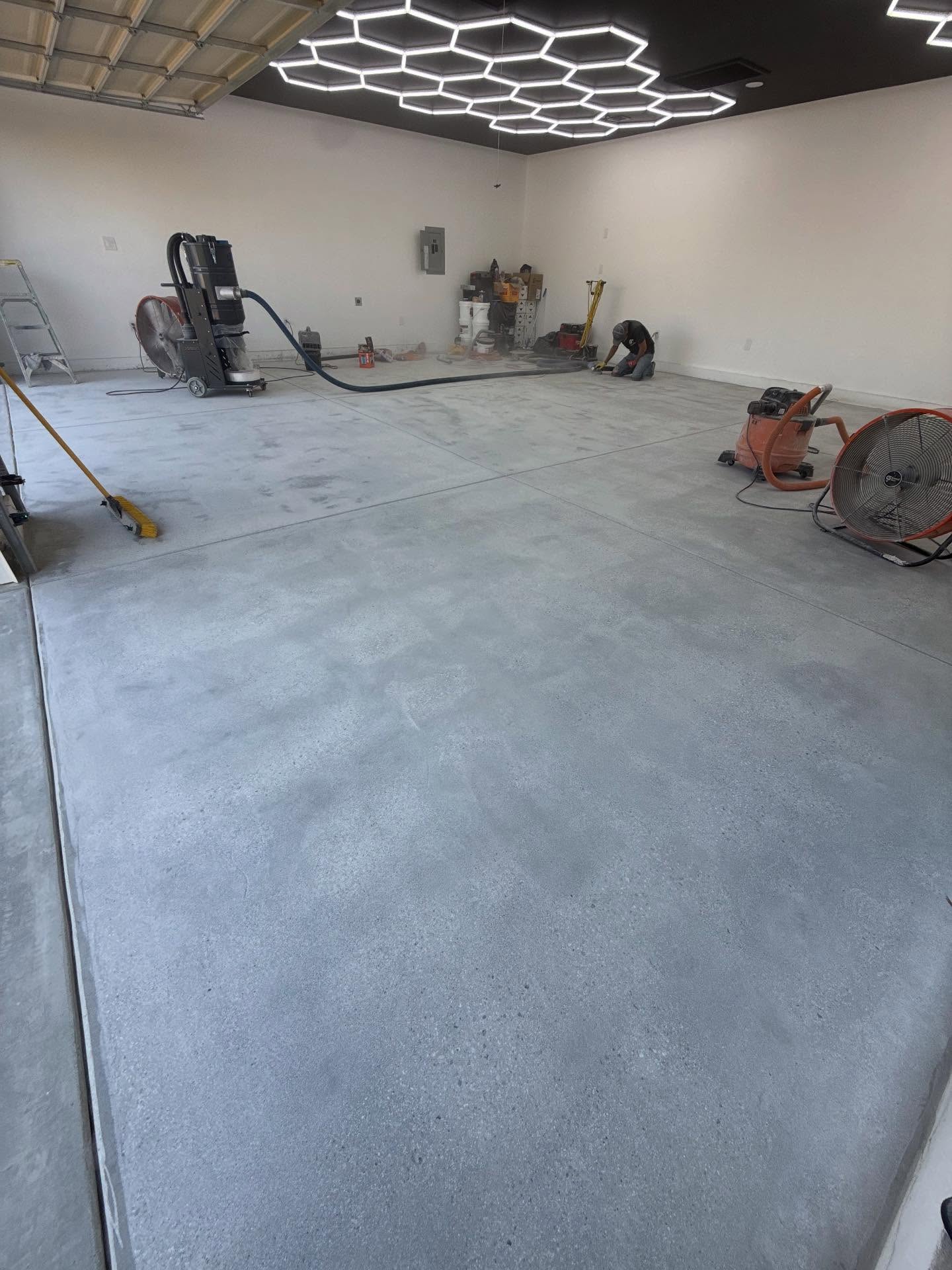
Santa Clarita is a master-planned city of roughly 228,000 people at the north end of Los Angeles County, and its commercial building stock reflects that. Most of what we coat here went up from the eighties onward, which means slabs poured to a modern standard with vapor barriers underneath and control joints cut where they should be.
That matters more than it sounds. In older LA industrial buildings we routinely grind through two or three previous coatings and find a slab that was never sealed under. In a Valencia business park unit we usually find bare, sound concrete and a job that runs to schedule. The quote reflects the difference rather than carrying a contingency for surprises that are not there.
The work concentrates in a few areas: the Valencia Industrial Center, the Rye Canyon business parks, and the retail and medical corridors running through Newhall and Canyon Country. Access is off I-5 and CA-14, and a crew that can back a trailer to the roll-up door finishes faster than one carrying material across a lot.
What commercial work here actually needs.
Moisture read, not guessed
Slab moisture in this valley swings hard between a wet winter and a bone-dry August. We take a calibrated reading rather than a visual call, because a slab that passes in September can read very differently in February.
Joints treated as joints
A large slab moves. Coating straight over a control joint means a crack telegraphs through within a season, so joints get filled flexible and honored in the surface rather than buried.
Scheduled around your hours
Most of this work happens between close and open. Fast-cure systems take foot traffic in hours, which is what makes a weekend turnaround possible without shutting you down.
Spec matched to the room
A warehouse needs thickness and joint work. A food prep area needs coved base and a slip rating. Those are requirements rather than upgrades, and a quote that omits them is not cheaper.
Working around a business that stays open.
Almost every commercial floor we pour in Santa Clarita goes down outside trading hours. A retail unit gives us two nights running. A business park tenant gives us a weekend. A medical suite gives us a Friday evening through Sunday. That constraint shapes the product choice as much as the schedule, because a standard epoxy holding a room for four days is not an option when the room has to open Monday.
Larger floors get phased so part of the space stays usable throughout, which means planning break lines somewhere sensible rather than wherever the shift ended. We walk that with you before anything is poured, because a cold joint across an open floor is visible for the life of the system and it should land where a wall or a fixture will sit.
The climate here is high-desert influenced rather than coastal, and it helps. Dry summers mean cure times land closer to the datasheet than they do near the ocean, and there is no marine layer holding humidity into the morning. What the heat does affect is working time during the pour itself, so summer installs start early and we bring cooling into an unconditioned unit rather than fighting a resin that is gelling faster than we can move it.
Every job is a fixed-price proposal written after an on-site walkthrough, not a number quoted over the phone and adjusted later. If the slab needs repair before a coating makes sense, that is itemized separately so you can see what is prep and what is finish. The crew is union-trained and the same people who quote the job are the ones who pour it.
Commercial spaces often need more than one system: something hard-wearing in back of house and something presentable out front. Flake handles the first, metallic or polished concrete the second. The main commercial epoxy page carries the full system detail; this one is about the valley. We cover all of Santa Clarita and Los Angeles County.
What commercial clients ask first.
How fast can you pour a commercial floor in Santa Clarita?
Santa Clarita sits inside our standard pour radius, straight up I-5. Walkthroughs schedule three to seven days out and commercial pours typically two weeks out, faster than residential because commercial work fills the nights and weekends between residential jobs. If you have a hard opening date, say so at the walkthrough and we will tell you honestly whether it is achievable.
Do we have to close?
Usually not. Most commercial work here happens overnight or across a weekend with fast-cure systems that take foot traffic in hours rather than days. A single room is often one night. A larger floor gets phased so part of the space stays usable throughout. Tell us your hours first and the schedule gets built around them.
What drives the price?
Square footage, the system specification, and the condition of the slab, in that order. A sound Valencia business park slab with no previous coating is the straightforward end. An older Newhall building with two failed coatings and a moisture problem needs prep that costs real money before any finish goes down. The walkthrough is what separates those, and the proposal is fixed afterward.
Our slab has cracks. Is coating it a waste of money?
Depends what the cracks are doing. Static cracks get filled rigidly and disappear under the coating. Cracks still moving, or areas patched repeatedly, mean the slab itself is shifting and no coating fixes that. We will tell you which you have rather than filling everything and letting it reappear next spring.
Can you add line marking or match our colors?
Generally yes within the range the systems come in, and we can inlay walkway lines, bay divisions and safety markings into the floor rather than painting them on top. Inlaid marking outlasts painted by years, which matters anywhere forklifts or pallet jacks cross it daily.
How long does a commercial floor last?
Ten to twenty-five years for the resin layer depending on the system and the traffic it takes. The topcoat is the wear surface and it can be refreshed at roughly the ten-year mark on a heavy-use floor without redoing the whole system. That refresh is a scuff-sand and one coat, usually a single night.
Santa Clarita, California. Valencia Industrial Center to the Rye Canyon parks, Newhall to Canyon Country.
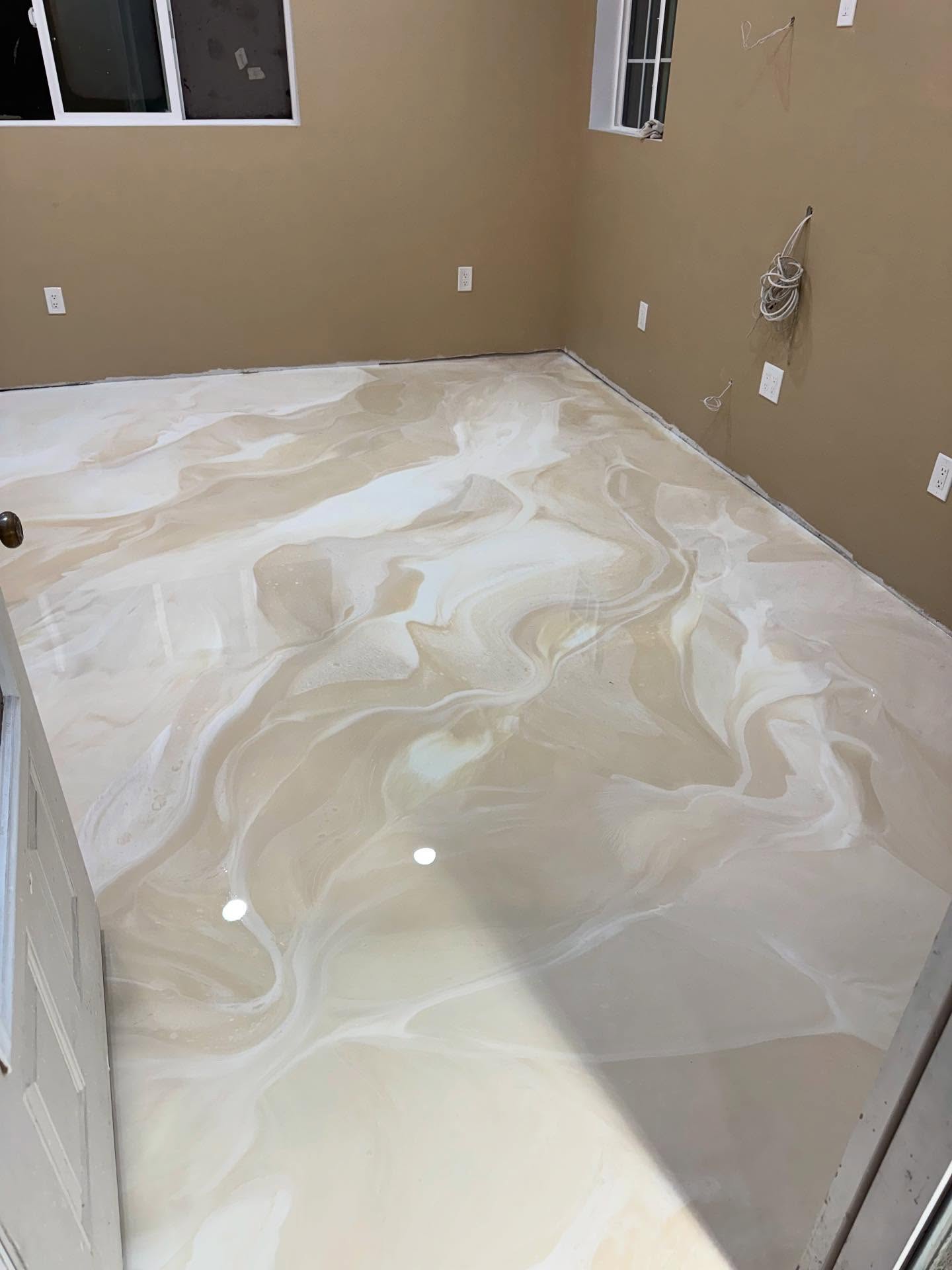
Commercial epoxy for your Santa Clarita space.
Free walkthrough in 30 minutes, fixed-price proposal the next morning. Tell us the square footage, what the space is used for, and the hours you cannot close.
Finished commercial floors are in the gallery, or send over the square footage.