A storefront on Colorado Boulevard may have been a shoe store, then a bookshop, then a smoothie counter, and every one of those tenants glued something to the concrete on the way out. When the new lease starts and the demo crew opens the floor, whatever turns up underneath sets the pace for the entire build-out. The coating is the fast part. Everything under it is the job.
We have been doing floors for twenty years, five of them as Concrete 2 Coatings, and the pattern in Pasadena’s older commercial blocks holds up almost every time. The floor is rarely one floor. It is four or five of them stacked on top of each other, and only the top layer has been seen by anybody since the eighties.
The floor is never one floor
Here is what typically comes off an Old Pasadena slab, roughly in the order the demo crew meets it, and what each layer costs you in labor.
- Carpet and carpet glue. The carpet lifts in an afternoon. The adhesive underneath is the part that matters. Pressure-sensitive glue turns gummy under a grinder and loads the diamonds solid within minutes, so it usually gets scraped mechanically first and only then ground.
- Thinset from a tile floor. Ceramic tile out of a nineties retail conversion sits in a cementitious bed that is hard, uneven, and bonded well. Removal is a ride-on scraper if the room is big enough to turn one around, then diamond grinding to knock the ridges flat.
- Yellow tile mastic. Softer than thinset, stickier than anything, and it smears rather than breaks. Mastic is the layer that quietly adds a day.
- Self-leveling compound. Somebody poured it to fix a hump in 2009. It may be sound and bonded, or it may be a shell over a hollow spot that only reveals itself when you sound the floor with a hammer. Hollow areas come out entirely.
- Black cutback adhesive. The asphalt-based glue under old nine-inch vinyl tile. In a building that age, cutback and the tile above it get sampled by a testing lab before anyone puts a tool to them, and a positive result puts an abatement contractor in front of us in the schedule. Worth knowing in week one rather than week four.
None of that is visible on a lease walk, which is why we pull a corner of the existing covering before writing anything down.
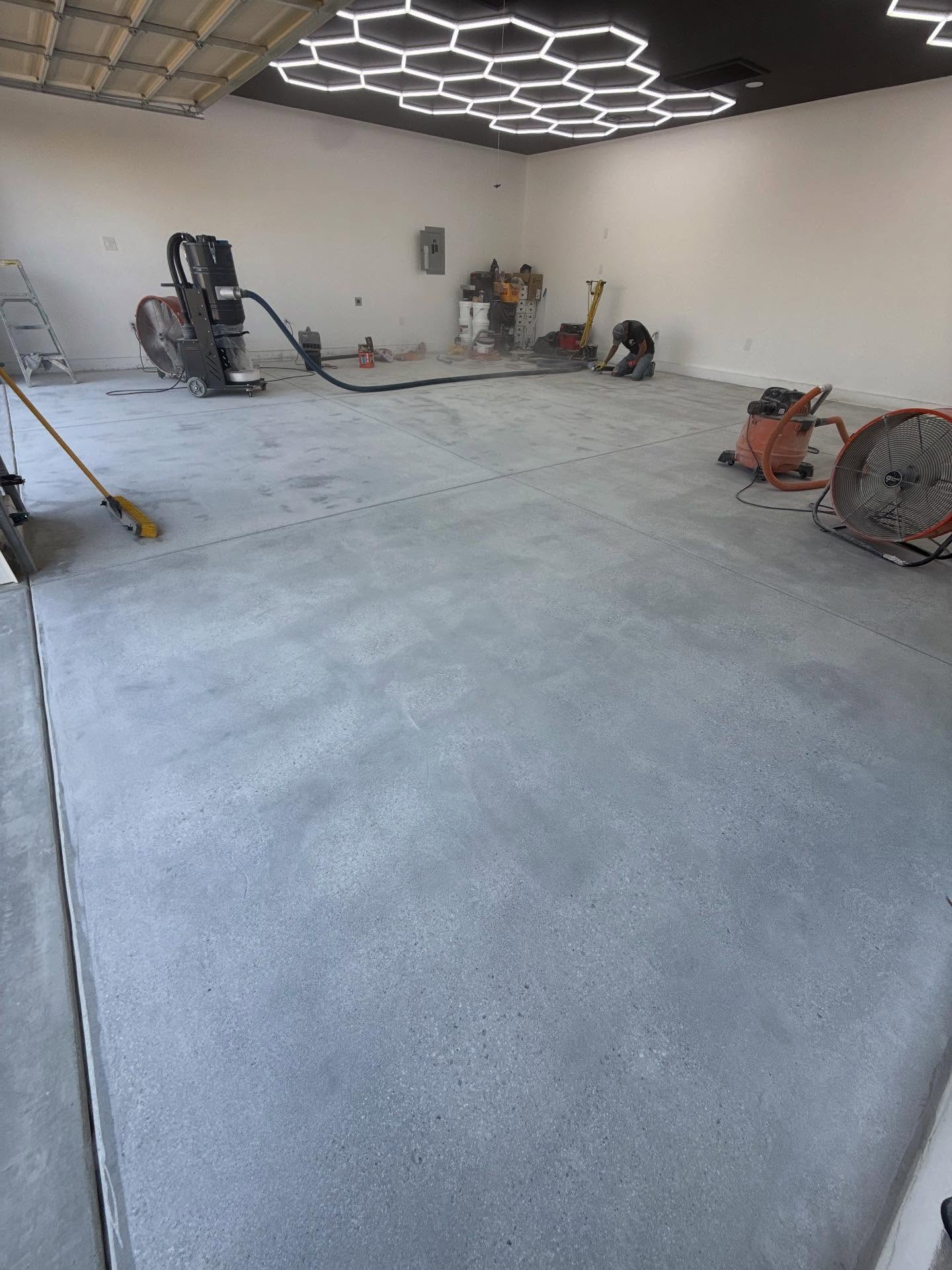
Why the slab reads wet a week after demo
A vinyl or sheet floor that sat on that slab for thirty years was doing a second job nobody hired it for. It was holding moisture down. Older Pasadena slabs were often poured directly on soil or sand with no plastic sheeting underneath, so ground moisture has always been moving up through the concrete. The old covering slowed it, trapped it at the surface, and kept the reading artificially low. Pull the covering and the slab starts venting for the first time in decades.
Two or three days after demo, a slab that looked bone dry will darken in patches. Planters and irrigation lines along the sidewalk feed it, and the grade toward the Arroyo does the rest. A Playhouse District suite sitting over a basement or a subterranean garage behaves differently again, because the air under that slab is conditioned and the vapor drive is weaker. The number you need cannot be guessed from the age of the building.
The moisture number decides the primer
We test after demo, not before, because a reading taken through an old floor covering is not the reading the coating will live with. Two methods do the work. Calcium chloride kits measure how much vapor comes out of a defined area of slab over three days. In-slab relative humidity probes sit in drilled holes and report the humidity inside the concrete itself, which is the better predictor on a slab with no vapor barrier under it. We also check surface alkalinity, since a very high pH will attack the wrong resin.
What comes back sets the primer, and the primer sets the budget line more than the color does. A dry slab takes a standard epoxy primer and the crew moves on. A slab in the middle range takes a moisture-tolerant primer. A wet slab takes a full moisture-mitigating membrane rolled over the prepared concrete, which adds a day and material, and which beats pulling a delaminated floor out of a finished restaurant in month eight. This is the one line item we will not let anybody value-engineer out.
Dust, noise, and the neighbors on both sides
Old Pasadena is a party-wall block. There is a restaurant on one side, a hotel above, and a boutique with open inventory ten feet through the brick. That geometry shapes how we prep.
Diamond grinding runs off vacuums with sealed collection, and on a tight tenant space it is the default because the dust stays contained and the sound stays at a level the neighbors tolerate. Shot blasting is faster over large open square footage and leaves a deeper profile, which some coatings want, but it is loud and it wants a clear floor with no plumbing stubs sticking up to catch the machine. On a two thousand square foot retail suite we usually grind. On an open restaurant floor being taken down to bare slab, we will blast the field and grind the perimeter and around every penetration.
Either way we build containment first: poly walls with zippered access at the storefront and any shared corridor, negative air pulling toward our side, floor protection on the path from the alley to the door. In the medical office blocks near Huntington Hospital and along South Lake we run prep at night, because a waiting room and a shot blaster do not belong in the same building at the same hour. Loading is its own conversation, since several of these buildings have no dock and a shared elevator with reserved hours.

A hundred-year-old building has moved
Flatness is the surprise on historic slabs. The building has settled, been re-leveled once or twice, had trenches cut for plumbing and patched by whoever was cheapest, and the result is a floor with long slow dips and a few hard humps. Nobody notices under carpet. Under a thin, glossy resin, every dip reads as a shadow and every hump reads as a bright line, because the coating follows the slab rather than correcting it.
So we sound the floor and shoot it with a laser before we spec. Localized low spots get patched with a fast-setting repair mortar. A room that is out everywhere gets a self-leveling underlayment poured over the primer, which adds a material day and is the honest answer when the alternative is a floor that photographs badly. Kitchen drains need positive slope toward them, and on an old back of house that slope usually has to be rebuilt rather than preserved. Thresholds matter too: if the corridor keeps its existing floor, the transition height gets worked out before the pour, not when the door will not clear.
Cove base and the back of house
A restaurant back of house is where the detailing earns its keep. Instead of a vinyl base strip glued to the drywall, we form an integral cove: the resin turns up the wall four to six inches in a continuous radius, so there is no seam at the floor and wall junction for water, grease, or a mop string to get into. It gets terminated with a clean cap line so it looks intentional rather than smeared.
Around floor sinks and drains we cut a keyway into the slab, anchor the coating into it, and seal the flange, which is the joint that fails first when it gets skipped. Under a dish pit, where the floor takes boiling water and then a cold rinse in the same minute, a urethane cement body handles the thermal swing better than a straight epoxy. Dining rooms and sales floors in the same building need none of that, and we do not sell it to them.
Grip in a kitchen, gloss in a showroom
Slip resistance is a dial, not a switch, and it is set by aggregate broadcast into the coating before the topcoat goes down. A working kitchen gets a heavy, coarse broadcast, because the floor will have oil on it and the crew will be moving fast in clogs. That texture holds grip, and it also holds soil, so the tradeoff is a floor that needs a deck brush rather than a flat mop. We would rather have that conversation with the chef before the pour than after.
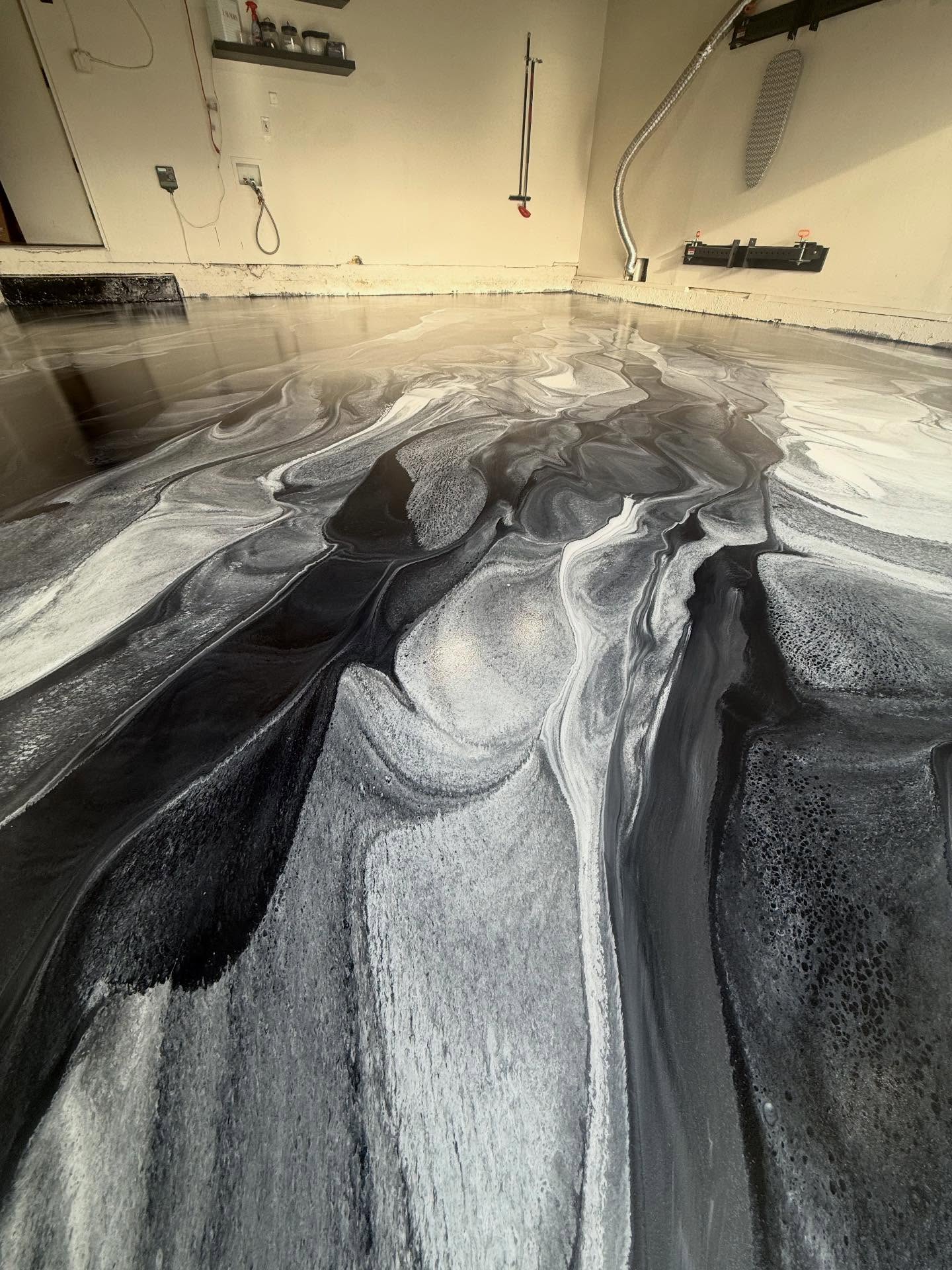
A retail sales floor on Colorado Boulevard is the opposite problem. The traffic is dry, the lighting is doing merchandising work, and the client wants reflection. There we run a fine broadcast or none at all under a clear topcoat that reads deep beneath the fixtures. Metallic and decorative pours belong in that room. Entry vestibules split the difference: a slightly textured field for the first eight feet inside the door handles tracked-in rain without dulling the rest of the space.
Sequencing with the general contractor
On a tenant improvement, our trade shows up twice and both visits have to be defended in the schedule. The first is right after demo, for testing and prep, while the space is empty and dirty and nobody minds dust. Doing moisture testing here rather than at the end is the single biggest thing a general contractor can do to protect the finish date, because the result may change the material order.
The second visit lands after mechanical, electrical and plumbing rough and before fixtures, casework and equipment. Pouring around a walk-in cooler that is already set is slower and looks worse. Afterward the floor needs protection paper for the trades that follow, and we will tell you how long before it takes foot traffic, wheels, and full chemical service, because those are three different dates.
When the clock is genuinely tight, the topcoat chemistry buys time. Polyaspartic finishes cure fast enough to hand a room back the next morning, which matters when a soft opening is booked and the landlord is billing rent either way. Detail on that system lives on the polyaspartic coatings page for Pasadena .
Start with a walkthrough
We are a family-owned shop, the crew is union-trained, and we run the decorative concrete side and the resinous side in house, so the person telling you what is under your floor is the person who will be grinding it. The walkthrough is free. Once the floor is open and tested, you get a fixed-price proposal with the prep scope, the primer decision, and the phasing written into it.
Call the shop at (714) 702-2567 or send the lease details through the contact page and we will get on the calendar before demo starts.
Related reading: Commercial epoxy in Pasadena · Polyaspartic coatings in Pasadena · Pasadena, CA · Recent installs